




Rainforests | Tropical fish | Environmental news | For kids | Madagascar | Photos | Mongabay-Indonesia | Languages | TCS Journal | Deforestation Tracker

HELP SUPPORT MONGABAY.COM


Mongabay.com was founded by Rhett Ayers Butler in 1999 out of his passion for wildlife and rainforests. Originally a side project which consumed nights and weekends, Rhett quit his day job to run mongabay full-time in 2004. In March 2009 Jeremy Hance became mongabay's first hire.

Mongabay is financed primarily through advertising, the majority of which is served by Google. However some of mongabay's most important projects, including the kids education initiative and our news reporting, now require resources that are unfortunately not fully met by advertising revenue. Therefore in June 2012 Mongabay.com launched a non-profit organization: mongabay.org, which as a public charity has tax-exempt status under section 501(c)(3) of the Internal Revenue Code. Contributions to Mongabay.org are deductible to U.S. taxpayers under section 170 of the Code.

If you like our service, we would be grateful for your support.

DONATIONS


BY CREDIT CARD    

If you are interested in making a direct donation online, you can use Paypal (secure and does not require an account) or Google Checkout. We have two options, a one-time donation and a monthly donation.

ONE-TIME DONATION
Paypal (no account required)

Google Checkout/Wallet
$
ONE-TIME DONATION
RECURRING MONTHLY DONATION
How would you like your funds used?

BY CHECK


We have a mailing address for checks:
    Mongabay.org
    P.O. BOX 0291,
    MENLO PARK, CA 94026-0291
    USA

We will provide you with documentation for any donations of $75.00 or more.


Why support Mongabay?


The purpose of mongabay is to raise interest in environmental issues and foster appreciation of wildlife and wild places. The site provides quality information on rainforests and environmental issues, reaching more than two million people per month. To learn more about the mission of mongabay, check out the preface of A Place Out of Time.

Mongabay.org has the specific mission of raising awareness about social and environmental issues relating to forests and other ecosystems. It has five focal areas:, which are explained here.

How can I help?


You can show your support of several ways.

Financial contributions.

Other ways to help.
  1. Volunteering.

    We have several projects for volunteers ranging from translation of a children's text about rainforests (currently available in nearly 40 languages) to social media. If you are interested in learning more, please check out our volunteering/internship page.

  2. Buying through Amazon links.

    You can use the following Amazon link to buy books, music and other merchandise from Amazon.com. Each time you use this link to make a purchase a small amount (1-5% depending on the item) will go towards maintaining the site. You can also take a look at the recommended books page for book ideas.

  3. Our book for kids and adults.

    Rainforests by Rhett Ayers Butler, founder and editor of mongabay.com. An overview of tropical rainforests for kids, based on mongabay.com's popular web site for children (kids.mongabay.com). Rainforests describes tropical rainforests, why they are important, and what is happening to them.

  4. Mongabay gear.

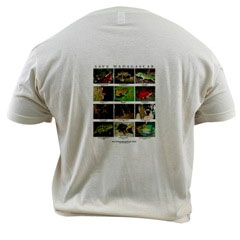
    You can buy mongabay.com and wildmadagascar.org apparel. A portion of each sale goes to the site. The most popular design is:

    Front

    Back

    Save Madagascar T-shirt

    This shirt features pictures of wildlife from Madagascar. It includes both the English name and Malagasy name for several animals.


    Other designs can be found at mongabay.com apparel and animals of madagascar designs

Cancel monthly donations to mongabay

If you'd like to cancel your recurring donation to mongabay.com, please use this link.


Mongabay's Rhett Butler
Rhett Butler, mongabay founder and director.


Rhett's inspiration, as told at TEDxYouth

Recent features

New global network bridges gap for primate conservation educators
(05/21/2013) Drawing from her personal experience as a primate educator and the challenges she saw others facing, Amy Clanin envisioned a network that would advance the field of primate conservation education by addressing three needs of educators: connections, resources, and services. It was this vision that led her to create the Primate Education Network (PEN). PEN is at the forefront of primate conservation education, providing a community and collaboration platform for primate educators.


A Tale of Two Elephants: celebrating the lives and mourning the deaths of Cirrocumulus and Ngampit
(05/07/2013) On March 21st, the organization Save the Elephants posted on their Facebook page that two African elephants had been poached inside a nearby reserve: "Sad news from the north of Kenya. Usually the national reserves are safe havens for elephants, and they know it. But in the last two weeks two of our study animals have been shot inside the Buffalo Springs reserve. First an 18 year-old bull called Ngampit and then, yesterday, 23 year-old female called Cirrocumulus (from the Clouds family)."


All the world's rarest birds in one book: photo contest enlivens new guide
(05/06/2013) The World's Rarest Birds is an extraordinary bird book. 590 different bird species are classified as Endangered or Critically Endangered, with many species only existing in captivity. A new book, The World's Rarest Birds, catalogs all of these species. Each species is shown with remarkable color-photography and illustrations. Threats to species habitat are described, population estimates per species are given, and each species has a quick response (QR) code that takes the reader to a species-specific BirdLife International webpage. The book also covers 60 Data Deficient species. Data Deficient means that there exists little to no information on the relative abundance and distribution of the species.


Conservation without supervision: Peruvian community group creates and patrols its own protected area
(04/30/2013) When we think of conservation areas, many of us think of iconic National Parks overseen by uniformed government employees or wilderness areas purchased and run from afar by big-donor organizations like The Nature Conservancy, Wildlife Conservation Society, WWF, or Conservation International. But what happens to ecosystems and wildlife in areas where there's a total lack of government presence and no money coming in for its protection? This is the story of one rural Peruvian community that took conservation matters into their own hands, with a little help from a dedicated pair of primate researchers, in order to protect a high biodiversity cloud forest.


What if companies actually had to compensate society for environmental destruction?
(04/29/2013) The environment is a public good. We all share and depend on clean water, a stable atmosphere, and abundant biodiversity for survival, not to mention health and societal well-being. But under our current global economy, industries can often destroy and pollute the environment—degrading public health and communities—without paying adequate compensation to the public good. Economists call this process "externalizing costs," i.e. the cost of environmental degradation in many cases is borne by society, instead of the companies that cause it. A new report from TEEB (The Economics of Ecosystems and Biodiversity), conducted by Trucost, highlights the scale of the problem: unpriced natural capital (i.e. that which is not taken into account by the global market) was worth $7.3 trillion in 2009, equal to 13 percent of that year's global economic output.


WEEKLY NEWSLETTER


Email:


About | Copyright & Use | Privacy | Advertising | Contact


About | Privacy
Copyright Rhett Butler 2012