Rhett Butler
Update: As of 12/31/2022, Rhett's biography has been consolidated here. This page is archived so please visit that link for his current bio. |
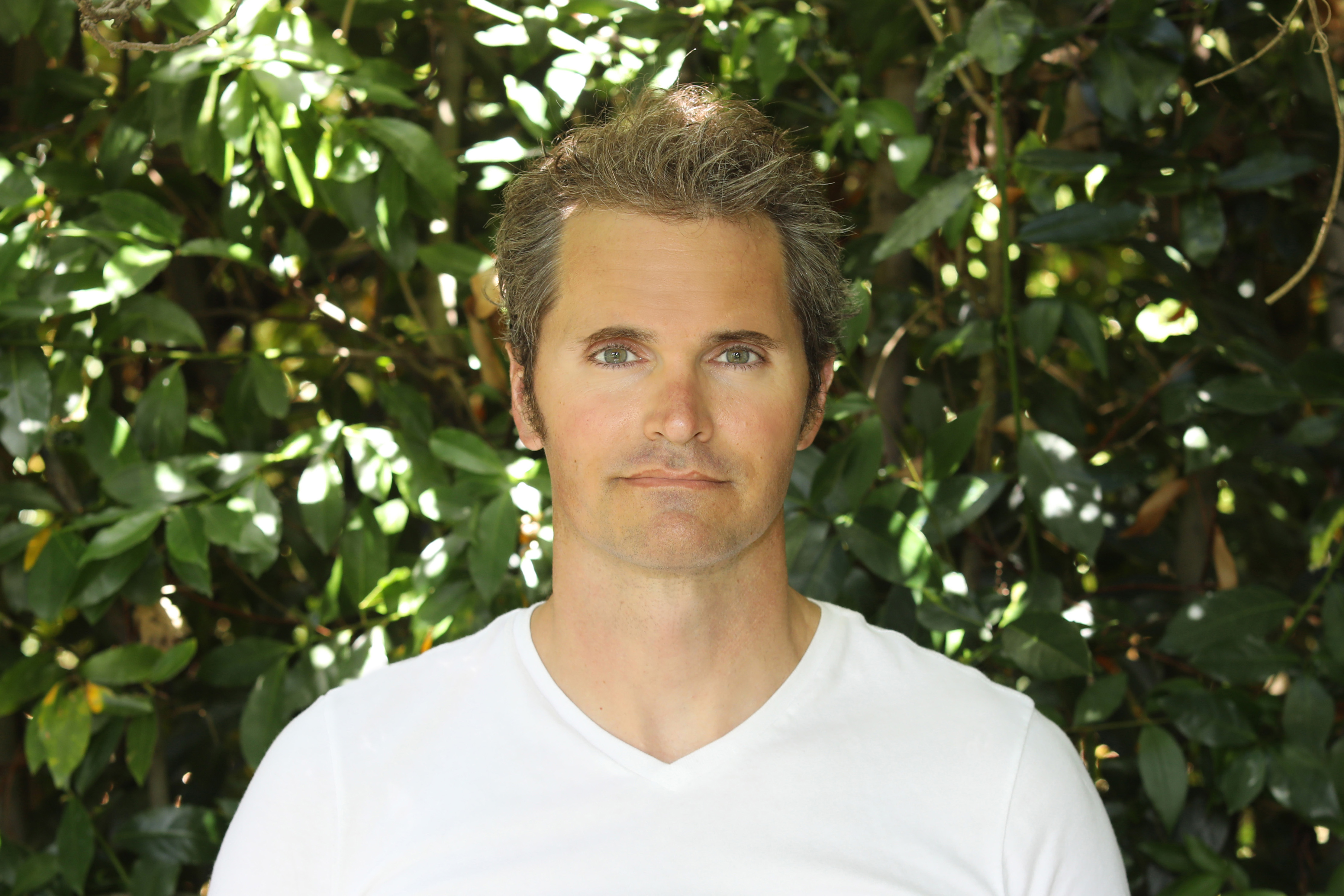
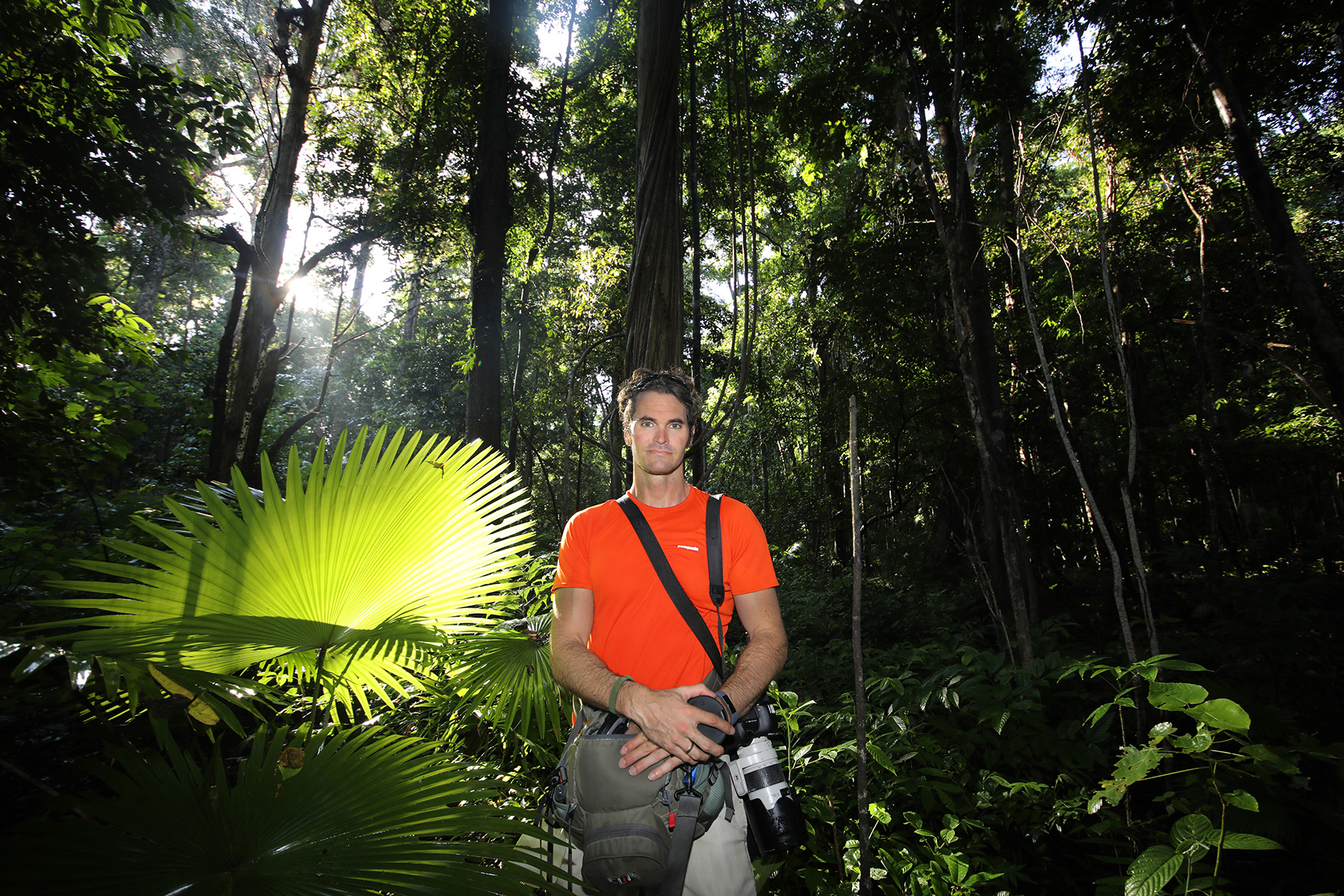
Summary: Rhett is the founder and CEO of Mongabay, a nonprofit environmental media organization. Beyond Mongabay, Rhett has advised a range of organizations and institutions, from news outlets to philanthropic foundations to development agencies, and his writing and photography have appeared in hundreds of publications. Rhett was the first journalist to win the Field Museum's Parker/Gentry Award from the Field Museum in Chicago.
Full biography: Rhett Butler founded Mongabay in 1999 with the mission of raising interest in and appreciation of wild lands and wildlife. For the first ten years of the project, he operated Mongabay on his own, publishing thousands of stories and tens of thousands of photos.
Today Rhett Butler serves as editor-in-chief and CEO of Mongabay, a non-profit media organization with about 80 staff across five bureaus (Global, Indonesia, Latin America, South Asia, and Brazil) and a network of around 800 correspondents in 80 countries who pursue stories ranging from conventional news articles to deeply-reported investigative projects.
Beyond Mongabay, Rhett Butler founded WildMadagascar.org, a site that highlights the spectacular cultural and biological richness of Madagascar and reports on environmental news for the Indian Ocean island nation.
Rhett Butler was also co-founder of Tropical Conservation Science (acquired by SAGE Publications in August 2016), an open-access academic journal that aims to provide opportunities for scientists in developing countries to publish their research, and the Tropical Forest Network (BATFN), a social network in the San Francisco Bay Area broadly interested in tropical forest conservation and ecology which operated from 2009-2019.
Outside of these pursuits, Rhett Butler has advised a wide range of organizations, including governments, multilateral development agencies, media outlets, academic institutions, foundations, and private sector entities. He has been an information source for the The Economist, BBC, CNN, CBS, NBC, Fox News, National Geographic, the Wall Street Journal, Fortune Magazine, Business Week, Bloomberg, the Discovery Channel, Animal Planet, Reuters, Voice of America, the Associated Press, the San Francisco Chronicle, the L.A. Times, the New York Times, the Washington Post, and Forbes, among many other media outlets.
Rhett Butler also speaks regularly on topics surrounding forests and the environment (especially trends in deforestation) and new media. He has spoken at Stanford University, the University of California at Berkeley, the University of California at Santa Cruz, the National University of Singapore, USAID, ETH Zurich, Yale, Princeton, the Association for Tropical Biology and Conservation, UNFCCC COP, the Smithsonian Tropical Research Institute, and Stony Brook University, among other places and events. In 2011 and 2012 he participated in the U.S. State Department Speakers Program in Indonesia.
Rhett Butler's work has been published outside of his web sites, including magazines, newspapers, online media, and academic journals (see below). His photos have appeared in hundreds of publications.

In 2011 Rhett Butler published RAINFORESTS, a book about rainforests geared toward kids. The text is based on the popular mongabay kids' section and includes more than 150 photos.
In April 2012 Rhett Butler hired a team in Indonesia to run mongabay.co.id, an Indonesian-language provider of environmental news and analysis. Mongabay.co.id officially launched in May 2012. In June 2016, he launched Mongabay-Latam, a Spanish-language news service for Latin America. In January 2018, Mongabay launched in India. In 2019, Mongabay hired its first staff in Brazil and in late 2020, Mongabay launched in Hindi.
Rhett Butler has been profiled in the San Francisco Chronicle, the Wall Street Journal, Voice of America and The Almanac, among other publications.
In 2014, Rhett Butler became the first journalist to win the Parker/Gentry Award, a conservation prize given annually by the Field Museum in Chicago. Rhett was honored with the Pongo Environmental Award in 2020, the SEAL Environmental Journalism Award in 2021, and the Heinz Award in 2022.
See Rhett Butler's motivation for starting mongabay.com, and subsequent development of Mongabay.org, the non-profit that now houses Mongabay News and other properties. Further background on Rhett Butler is available at the FAQs/Interview page
Contact Rhett Butler:
rhett [at] mongabay [dot] com
Update: As of 12/31/2022, Rhett's biography has been consolidated here. This page is archived so please visit that link for his current bio. |
Highlighted non-Mongabay publications:
2019
- Butler, R (2019). Indonesia: As forests die, expect hotter days, longer droughts. [Free version] Straits Times. 30 Sep 2019.
- Burivalova, Z, Butler, R, and Wilcove, D (2019). A response to Correia et al. Front Ecol Environ 2019; 17( 5): 256– 256, doi:10.1002/fee.2047
- Burivalova, Z, Allnutt, T, Rademacher, D, Schlemm, A, Wilcove, D, Butler, R (2019). What works in tropical forest conservation, and what does not: Effectiveness of four strategies in terms of environmental, social, and economic outcomes. Conservation Science and Practice. https://doi.org/10.1111/csp2.28 17 Apr 2019.
- Butler, R (2019). How listening ears can help save the forests [LinkedIn version]. The Straits Times 05 Jan 2019.
- Burivalova, Z, Game, E, Butler, R, and Wilcove, D (2019). The sound of a tropical forest PDF. Science 04 Jan 2019: Vol. 363, Issue 6422, pp. 28-29 DOI: 10.1126/science.aav1902
2018
- Burivalova, Z, Butler, R, and Wilcove, D (2018). Analyzing Google search data to debunk myths about the public’s interest in conservation. Frontiers in Ecology and the Environment; doi:10.1002/fee.1962. October 2018.
2014
- Butler, R (2014). A Conservationist Sees Signs of Hope for the World’s Rainforests. Yale Environment 360 (e360). Yale School of Forestry & Environmental Studies. October 2014.
- Butler, R (2014). A New Leaf in the Rainforest: Longtime Villain Vows Reform. Yale Environment 360 (e360). Yale School of Forestry & Environmental Studies. March 2014.
2012
- Butler, R (2012). A Desperate Effort to Save the Rainforest of Borneo. Yale Environment 360 (e360). Yale School of Forestry & Environmental Studies. June 2012.
- Butler, R (2012). Fighting A Last-Ditch Battle to Save the Rare Javan Rhino. Yale Environment 360 (e360). Yale School of Forestry & Environmental Studies. March 2012.
2011
- Butler, R (2011). A Revolutionary Technology is Unlocking Secrets of the Forest. Yale Environment 360 (e360). Yale School of Forestry & Environmental Studies. October 2011.
- Butler, R and Hance, J. (2011). A Huge Oil Palm Plantation Puts African Rainforest at Risk. Yale Environment 360 (e360). Yale School of Forestry & Environmental Studies. September 2011.
- Butler, R. (2011). Rainforests. CreateSpace. ISBN-10: 1463774575 September 2011.
- Sodhi, Navjot S., Rhett Butler, and Peter Raven (2011). Bottom-Up Conservation. Biotropica. September 2011.
- Butler, R (2011). In Brazil, Palm Oil Plantations Could Help Preserve Amazon. Yale Environment 360 (e360). Yale School of Forestry & Environmental Studies. June 2011.
- Saloh, Y. and Butler, R (2011). Moratorium dan Ekonomi Rendah Karbon Koran Tempo. May 27, 2011.
- Butler, R (2011). Will Indonesia Lose the Next Oil Palm? The Jakarta Post. May 16, 2011.
- Sodhi, Navjot S., Rhett Butler, William F. Laurance and Luke Gibson. Conservation successes at micro, meso and macro scales. Trends in Ecology and Evolution.
2010
- Butler, R (2010). Indonesia's Corruption Legacy Clouds a Forest Protection Plan. Yale Environment 360 (e360). Yale School of Forestry & Environmental Studies. December 2010.
- Herndon, C. and Butler, R (2010). Significance of biodiversity to health. Accepted for publication in Biotropica. BIOTROPICA 42(5): 558–560 2010 10.1111/j.1744-7429.2010.00672.x
- Butler, R (2010). In the Battle to Save Forests, Activists Target Corporations. Yale Environment 360 (e360). Yale School of Forestry & Environmental Studies. June 2010.
- Butler, R (2010). Amazon Tribes Embrace Technology to Protect their Rainforest Home. GeoWorld Magazine. April 2010
- Ghazoul, J., Koh, L.P., and Butler, R. (in review). A REDD light for wildlife friendly farming. Conservation Biology, Volume 24, No. 3, 644–648.
- Ghazoul, J., Butler, R., Mateo-Vega, J., and Koh, L.P. REDD: a reckoning of environment and development implications. Trends in Ecology and Evolution Vol.25 No.7
- Laurance, W.F., Koh, L.P., Butler, R., Sodhi, N.S., Bradshaw, C.J.A., Neidel, J.D., & Consunji, H. (2009). Improving the Performance of the Roundtable on Sustainable Palm Oil for Nature Conservation. Conservation Biology, 24, 377-381
- Koh, L.P. and Butler, R (2010). Can REDD make natural forests competitive with oil palm?. ITTO Tropical Forest Update 19 No 1
- Butler, R. and Koh, L.P. Sharing the burden of producing sustainable biofuels. 12 January 2010
- Butler, R (2010). Madagascar's Political Chaos Threatens Conservation Gains. Yale Environment 360 (e360). Yale School of Forestry & Environmental Studies. 4 January 2010
2009
- Butler, R., Koh, L.P., & Mateo-Vega, J., Ghazoul, J. (2009). A Global Opportunity Cost Model.
- Koh, L.P., Ghazoul, J., Butler, R., Laurance, W., Sodhi, N., Mateo-Vega, J., and Bradshaw, C. Wash and Spin Cycle Threats to Tropical Biodiversity. BIOTROPICA: 1–5 2009 10.1111/j.1744-7429.2009.00588.x
- Butler, R (2009). Controlling the Ranching Boom That Threatens the Amazon. Yale Environment 360 (e360). Yale School of Forestry & Environmental Studies. 10 August 2009
- Butler, R (2009). Big REDD. Washington Monthly. July/August 2009
- Butler, R (2009). With The Clearing Of Forests, Baby Orangutans Are Marooned. Yale Environment 360 (e360). Yale School of Forestry & Environmental Studies. 25 June 2009
- Koh, L.P., Butler, R., and Bradshaw,C.J. Conversion of Indonesia's peatlands. Frontiers in Ecology and the Environment. June 2009. doi: 10.1890/09.WB.013
- Butler, R., Koh, L.P., & Ghazoul, J. (2009). REDD in the red: palm oil could undermine carbon payment schemes. Conservation Letters Conservation Letters 1-7 doi: 10.1111/j.1755-263X.2009.00047.x
- Butler, R. and Laurance, W. (2009) Is oil palm the next emerging threat to the Amazon?. Tropical Conservation Science Vol.2(1):1-10, 2009.
- Butler, R (2009). Satellites and Google Earth prove potent conservation tool. Yale Environment 360 (e360). Yale School of Forestry & Environmental Studies. 26 March 2009
- Butler, R (2009). Laos Emerges as Key Source In Asia's Illicit Wildlife Trade. Yale Environment 360 (e360). Yale School of Forestry & Environmental Studies. 26 February 2009
2008
- Butler, R. and Laurance, W. (2008) New strategies for conserving tropical forests. Trends in Ecology & Evolution. Available online 24 July 2008. doi:10.1016/j.tree.2008.05.006
- Butler, R (2008). Global Commodities Boom Fuels New Assault on Amazon. Yale Environment 360 (e360). Yale School of Forestry & Environmental Studies. 19 June 2008
- Butler, R (2008). As Rain Forests Disappear, A Market Solution Emerges. Yale Environment 360 (e360). Yale School of Forestry & Environmental Studies. 11 December 2008
- Butler, R (2008) Gold threat to French Guiana paradise. BBC News. 14 May 2008.
2007
- Butler, R (2007) How green is palm oil? The Jakarta Post. 24 September 2007
- Butler, R. and Conway S. (2007) Could peatlands conservation be profitable?. The Jakarta Post. 22 August 2007
- Thoumi, G. and Butler, R. (2007) Carbon credits could be big earner for Indonesia. The Jakarta Post. 28 July 2007
Other activities:
- Adjunct Faculty at the Center for Global Discovery and Conservation Science (GDCS) (2019-present)
- Deforestation Advisor for The Skoll Foundation (2010-2012)
- Co-founder of the Bay Area Tropical Forest Network (2009)
- Co-founder of Tropical Conservation Science (2007)
- See Rhett's LinkedIn profile for more.
Biography Card:
Founder, CEO, and Executive Editor
Mongabay
Menlo Park, CA 94025
Rhett Butler's personal website: ButlerNature.com