Sections:
|
|
THE SOCIAL IMPACT OF OIL PALM IN BORNEO
For most of its history Borneo was scarcely populated by humans. The unforgiving climate and dense rainforest kept populations small and scattered. In the past half century this has all changed. The influx of more than half a million transmigrants into Borneo over the past thirty years has doubled the island's population and created tremendous demand for jobs. Initially the rubber and logging industries provided employment, but when this collapsed in the mid- (Malaysia) to late-1990s (Kalimantan), work opportunities dried up for most of the local population. Despite this, hundreds of new arrivals continued to show up in Borneo on a weekly basis.
Rising unemployment was a serious concern in Borneo in the late 1990s and early 2000s and ethnic conflict raged in parts of Kalimantan during this time. The sudden rise of the oil palm in the late 1990s and early 2000s was seen as a welcome opportunity for many residents and local governments. Observers are only now seeing the full-cost of rapid growth in the sector.
Environmental Impacts
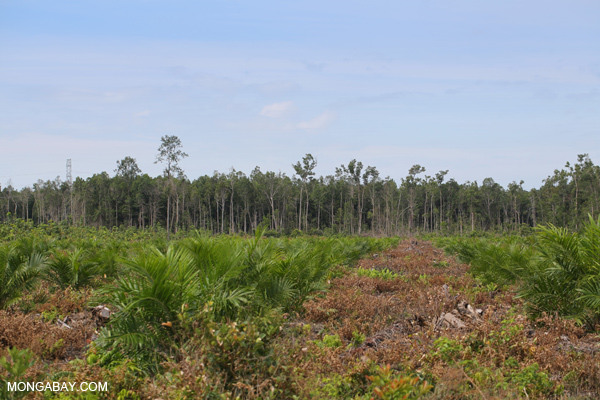
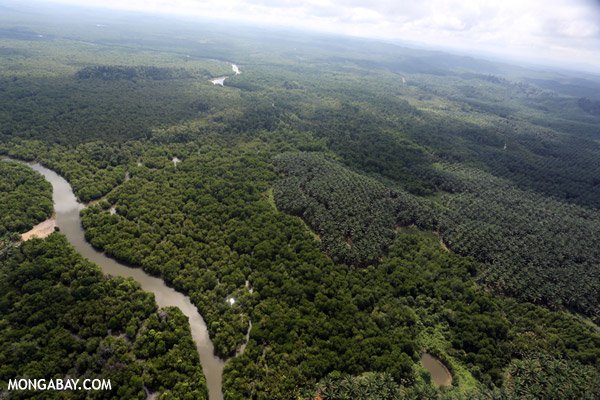
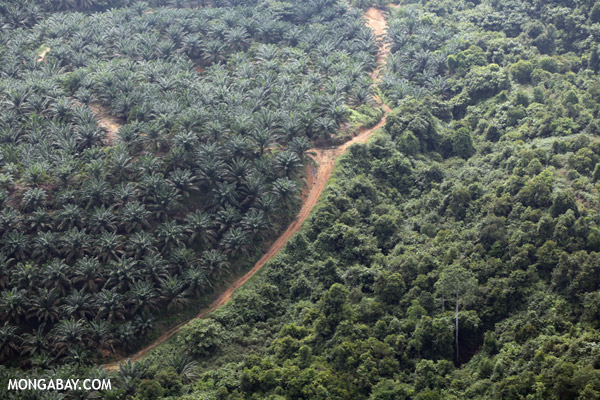
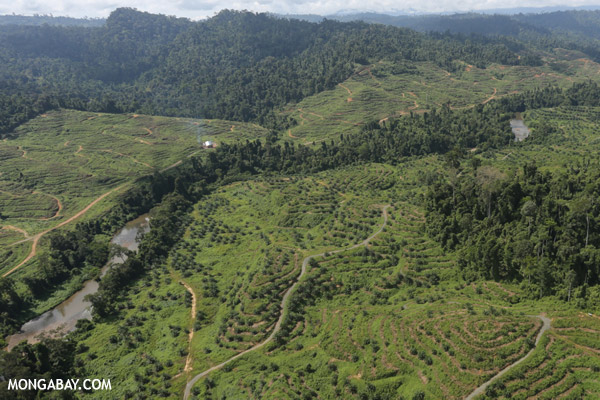
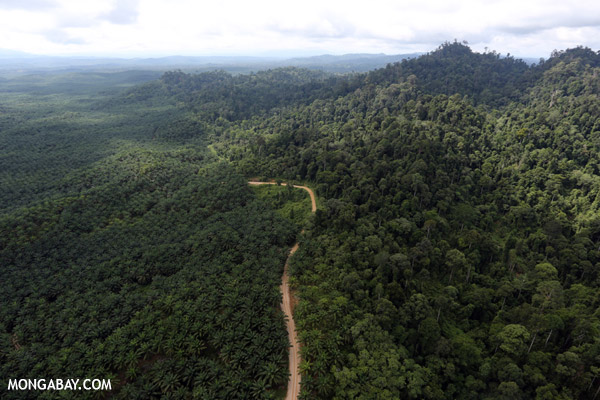
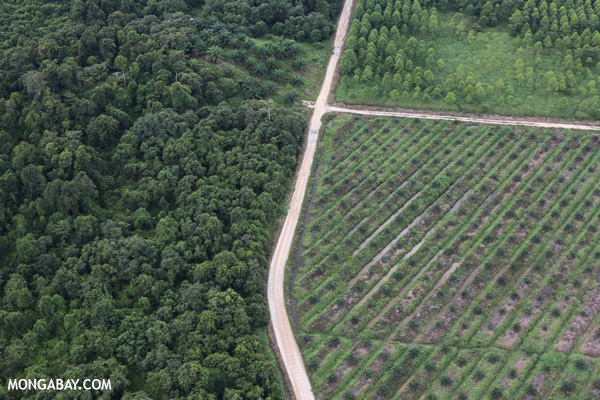
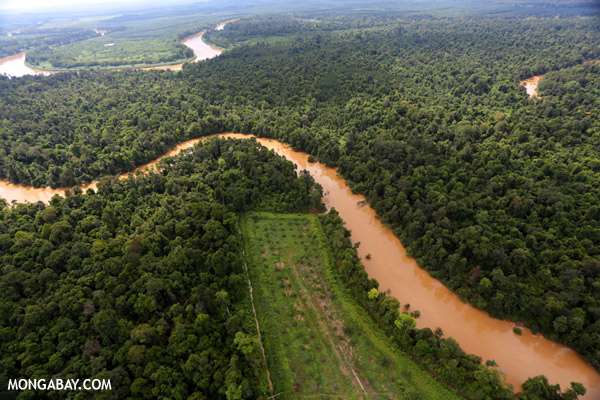
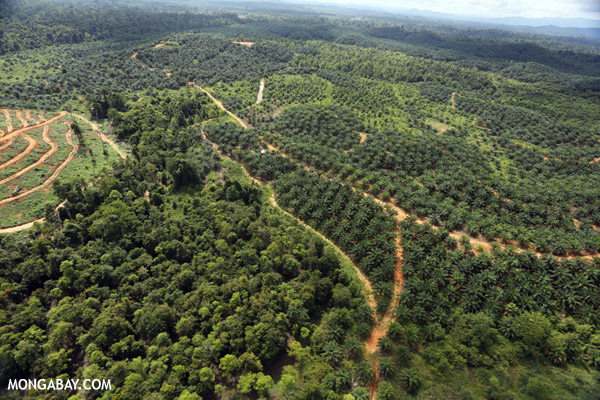
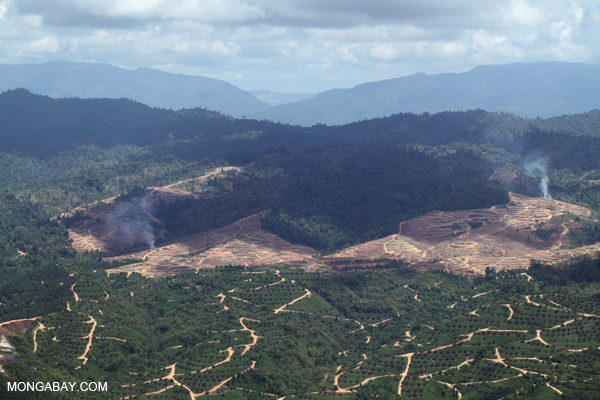
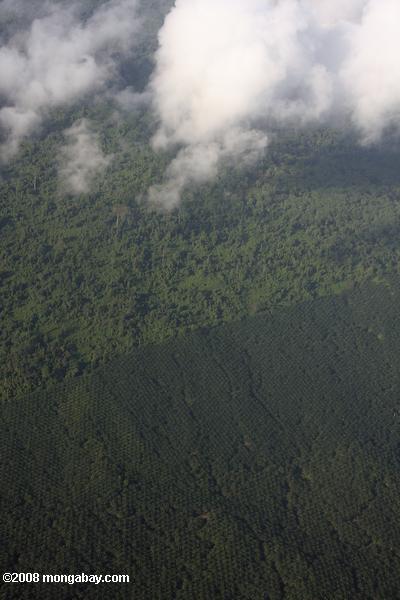
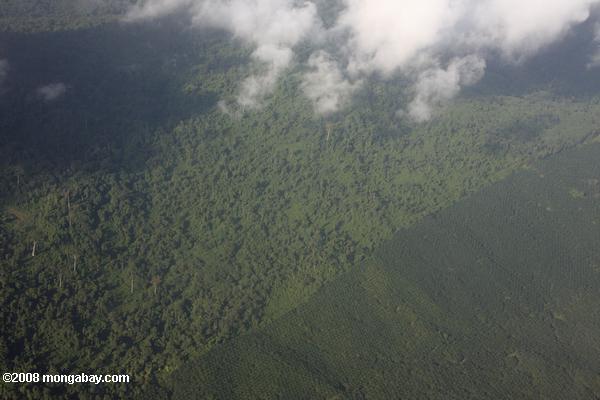
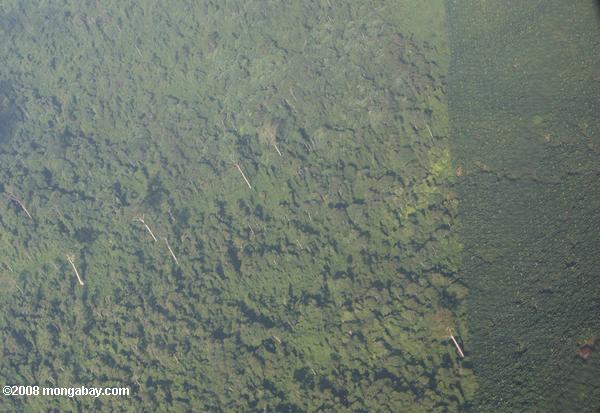
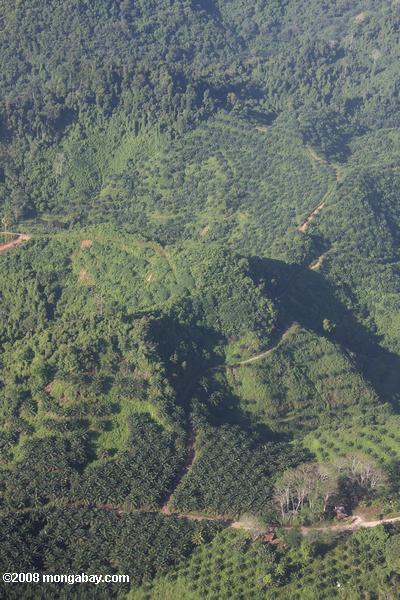
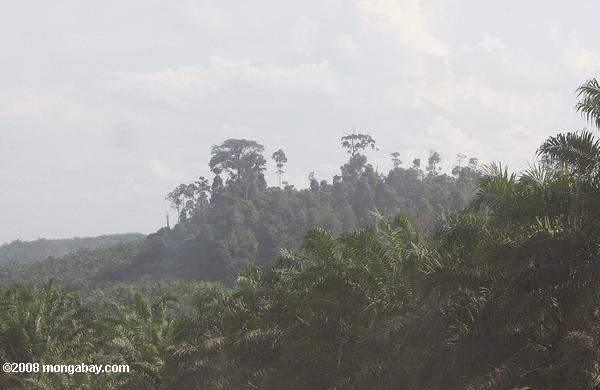
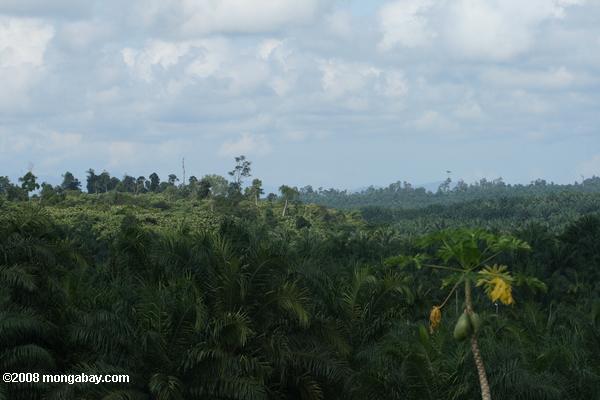
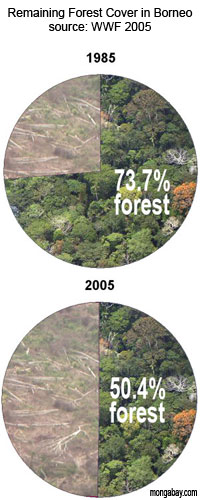
Beyond the obvious deforestation that results from clearing lowland rainforest for plantations (86 percent of deforestation in Malaysia from 1995-2000 was for oil palm plantations), there are other environmental impacts of oil palm cultivation. Several studies have found a significant reduction (on the order of 80 percent for plants and 80-90 percent for mammals, birds, and reptiles) in biological diversity following forest conversion to oil palm plantation. Further, many animals will not move through plantations while others, like orangutans, become crop pests putting them at risk of defensive poaching by plantation managers. The use of herbicides and pesticides can also impact species composition and pollute local waterways. Drainage systems required for plantations (oil palm plantations in Borneo are often established in swamp forest) may lower water tables, affecting neighboring forest areas. Further, destruction of peat lands increases the risk of flooding and fire. Land-clearing fires set by large oil palm plantation owners were the single largest cause of the massive 1997-1998 fires in Borneo.
For more see Why is oil palm replacing tropical rainforests?
Social Impacts
The social impacts of oil palm plantations are just beginning to be understood, in a large part thanks to the work of Dr. Lisa Curran. While there is no doubt that oil palm plantations provide much needed employment opportunities in Borneo there are questions on the fairness of the existing system which appears to sometimes lock small plantation owners into conditions akin to slavery.
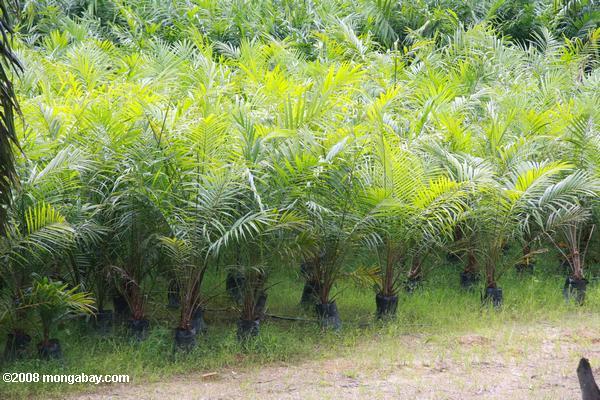
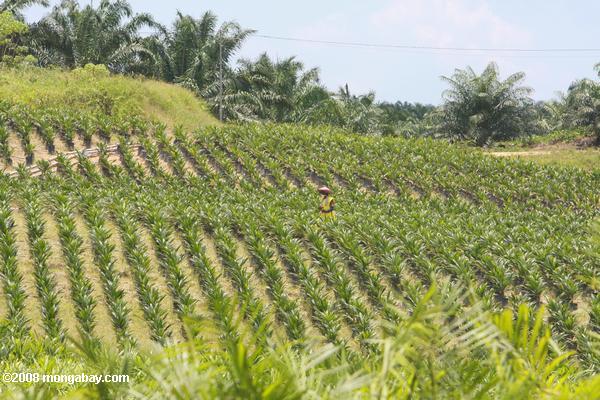
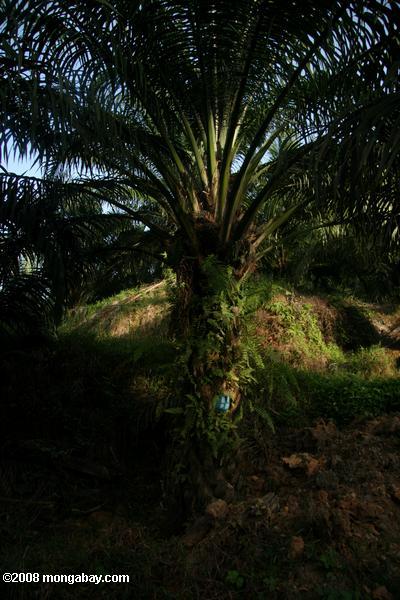
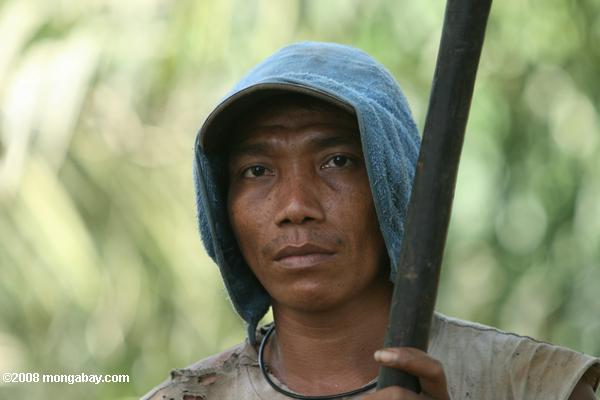
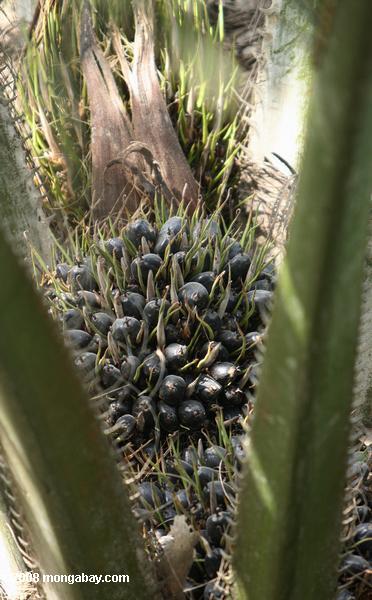
Given the scarcity of timber in parts of Borneo, much of its population has few economic options at present. Oil palm seems to be the best alternative for communities that are just eking a living off rubber cultivation, subsistence rice farming, and fruit gardens. When a large agricultural firm enters an area, some community members are often eager to become part of an oil palm plantation. Lacking legal title to their land, deals are often structured so that members of the community acquire 2-3 hectares (508 acres) of land for oil palm cultivation. They typically borrow some $3,000-6,000 (at 30 percent interest per year) from the parent firm for the seedlings, fertilizers, and other supplies. Because oil palm takes 3-4 years to bear fruit, they work as day laborers at $2.50 per day on mature plantations. In the meantime their plot generates no income but requires fertilizers and pesticides, which are purchased from the oil palm company. Once their plantation becomes productive, the average income for a 2 hectare allotment is $682-900 per month. In the past, rubber and wood generated $350-1000 month, according to Curran. The low level of income combined with large start-up costs and relatively high interest payments virtually ensures that small holders will be perpetually indebted to the oil palm company.
Curran said this debt, combined with almost total dependence on entities they barely trust, has a psychological impact on communities. Because there are no ways to contest actions by the company, conflicts invariably arise within communities, especially when a large part of the community (Dayaks often oppose oil palm schemes) has opposed the plantation. At times under-the-table means are used to sway a community. For example, a gift of a motorbike can win over influential community leaders. Once the oil palm firm gets the approval, it may negotiate on a one-on-one basis with each household, eliminating any sort of bargaining power of the greater community.
Surveys by Curran suggest that communities in West Kalimantan are deeply concerned about flooding after the establishment of oil palm plantations. They also worry about loss of forest resources and culture -- older community members don't always like the idea of women and children working on plantations. Oil palm cultivation also makes local people more dependent on agricultural firms since they no longer grow their own food. Finally, some communities have expressed dissatisfaction for working for Malaysians. They would rather be working independently, according to Curran. While they have a litany of complaints, few see other alternatives.
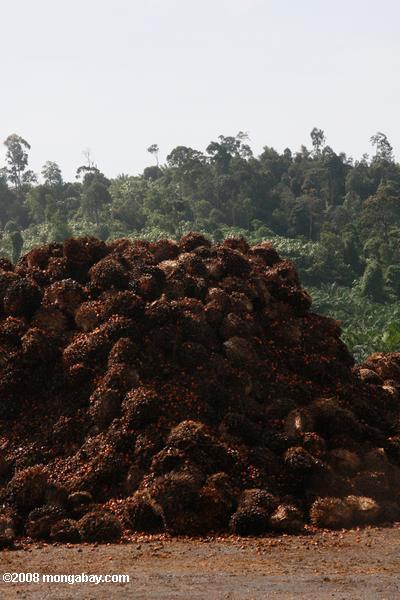
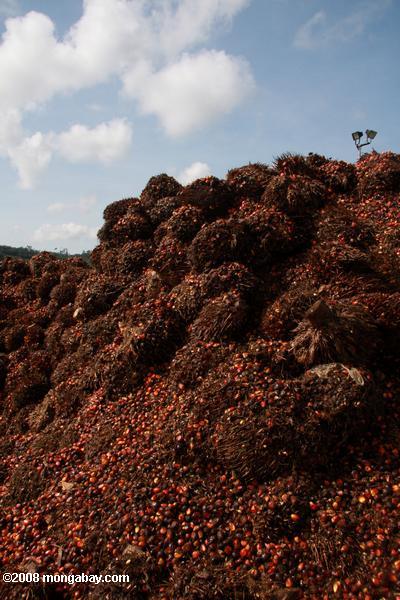
Meanwhile oil palm firms are making a fortune. By Curran's calculations, some firms in West Kalimantan are seeing a 26 percent annual internal rate of return over a 25-year period, an astounding number. Because of booming demand for biofuels, they have little downside risk.
"Firms are making a lot of money without a lot of accountability," said Curran, speaking at Stanford University in January 2007.
For more see Oil Palm
NEWS ON OIL PALM 
Malaysia's indigenous people to get land rights for first time
(11/19/2008) Malaysia's government will for the first time grant ownership rights of land farmed by indigenous people, reports the Associated Press, but some may see the legal change as a scheme to promote oil palm expansion.
South Korea to lease half of Madagascar's arable land for corn, oil palm production
(11/19/2008) South Korea's Daewoo has signed a 99-year lease for half of Madagascar's arable land, reports the Financial Times. The agreement covers 1.3 million hectares (3.2 million acres) — an area half the size of Belgium. Daewoo says it plans to plant corn on 1 million hectares in the arid western part of the island and 300,000 ha (740,000 acres) of oil palm on land in the tropical east, a region that is home to the bulk of Madagascar's rare rainforests. The company will produce the food for export and plans to import workers from South Africa, although a Daewoo spokesman said that the project could create up to 70,000 local jobs.
Greenpeace activists block palm oil shipment from departing Indonesia for Europe
(11/11/2008) Greenpeace activists blocked a palm oil shipment from departing Dumai, Indonesia's main palm oil export port, for Europe to protest against the ongoing destruction of Indonesia's forests.
Biodiversity of rainforests should not be compared with oil palm plantations says palm oil council chief
(11/11/2008) Scientists should compare the biodiversity oil palm plantations to other industrial monocultures, not the rainforests they replace, said Dr. Yusof Basiron, CEO of the Malaysian Palm Oil Council (MPOC), in a post on his blog. Basiron's comments are noteworthy because until now he has maintained that oil palm plantations are "planted forests" rather than an industrial crop.
First RSPO-certified ("eco-friendly") palm oil shipment to arrive in Europe
(11/10/2008) The first shipment of palm oil certified under the Roundtable on Sustainable Palm Oil (RSPO) is expected to arrive in Europe Tuesday, but an environmental group is already criticizing the initiative's credentials.
Malaysia, Indonesia to curtail palm oil production due to low prices
(11/8/2008) Malaysia and Indonesia ̵ countries that account for more than 85 percent of global palm oil production — will cut production in an effort to shore up collapsing palm oil prices, reports The Jakarta Post. The decline in palm oil prices is expected to slow expansion of oil palm plantations in Indonesia and Malaysia, a development that will please environmentalists who blame the palm oil industry for large-scale destruction of rainforests across Southeast Asia.
EU's sustainable biofuels push angers Malaysia, Brazil
(11/7/2008) Eight developing countries threatened to file a World Trade Organization complaint against the E.U. for its proposed legislation to require imported biofuels to meet environmental standards, reports Reuters.
Palm oil companies propose satellite monitoring of their plantations to ensure sustainability
(11/5/2008) The Roundtable on Sustainable Palm Oil (RSPO) is considering a proposal to use satellite imagery to enforce criteria that high value conservation areas are not converted to oil palm plantations, reports Ian Wood of the Telegraph. The move would boost RSPO's credibility at a time when the industry-lead sustainability initiative is under fire from environmentalists who say its performance to date suggests it is merely an exercise in greenwashing.
Oil palm expansion in Indonesian Borneo increased 400-fold from 1991-2007
(10/30/2008) Annual forest conversion to palm oil plantations increased 400-fold from 1,163 hectares in 1991 to 461,992 hectares in 2007 in Central Kalimantan, on the island of Borneo, reports a new report published by Forest Watch Indonesia, a local NGO.
Borneo logging road puts rainforest, indigenous communities at risk
(10/22/2008) A 186-mile (300-km) logging road to the top of the Bario highlands in northern Sarawak puts the state's increasingly rare natural forest at risk, warns the Borneo Resources Institute, a grassroots environmental group.
Colombian community leader assassinated by agroindustry-backed vigilantes
(10/16/2008) A community leader who opposed paramilitary-based seizure and occupation of land for industrial oil palm plantations and cattle ranches in northwest Colombia has been assassinated, reports the Center for International Policy's Colombia Program and the World Rainforest Movement.
Snares set by palm oil workers taking a toll on pygmy elephants of Borneo
(10/12/2008) Wildlife rangers are finding increasing numbers of Borneo Pygmy elephants injured or killed by snares set by poorly paid oil palm plantation workers, reports Malaysia's Sabah Wildlife Department.
Indonesian governors agree to protect Sumatra's endangered forests
(10/9/2008) The ten governors of Sumatra — along with four federal ministers — have signed an agreement to protect forests and other ecosystems on the Indonesian island, according to WWF. The announcement is significant because Sumatra is a biodiversity hotspot — home to rare and endemic wildlife — that is under great threat from logging and expansion oil palm plantations. The island has lost 48 percent of its forest cover since 1985.
Palm oil industry relies on greenwashing to mislead consumers, alleges report
(10/8/2008) The Malaysian palm oil industry is relying on marketing tactics that mislead the public about its environmental performance rather than taking effective steps to become "greener" alleges a new report from the environmental group Friends of the Earth (FOE).
Borneo forest people reject oil palm plantation on their land
(10/5/2008) Indigenous forest dwellers in Sarawak, in the Malaysian part of Borneo, have rejected a proposal to turn 80,000 hectares (250,000 acres) of the land into an oil palm plantation, reports the Malaysian Star.
Palm oil firm becomes first to win eco-certification
(9/28/2008) United Plantations, a Malaysia-based palm oil producer, has become the first oil palm plantation firm to be certified for adopting the strictest standards of sustainability for palm oil production, according to Bernama.
Malaysian oil palm firms eye Papua for expansion
(9/26/2008) Malaysian palm oil firms are looking to aggressively expand operations in Papua, the Indonesian part of New Guinea, reports Bernama.
Logging, wildlife trade drive sun bears toward extinction
(9/25/2008) Industrial logging, large-scale forest conversion for oil palm plantations, and the illegal wildlife trade have left sun bears the rarest species of bear on the planet. Recognizing their dire status, Siew Te Wong, a Ph.D. candidate at the University of Montana, is working in Malaysia to save the species from extinction. Known as "Sun Bear Man" in some circles, Siew Te Wong is setting up the Bornean Sun Bear Conservation Centre (BSBCC) in Sabah, a Malaysian state on the island of Borneo. The project aims to save sun bears, which have largely overlooked by conservationists, through research, education, rehabilitation, and habitat conservation.
Monoculture tree plantations are "green deserts" not forests, say activists
(9/19/2008) A number of environmental and social organizations have declared September 21st: International Day against Monoculture Tree Plantations to highlight the social upheaval and environmental degradation ૼ including impacts on global biodiversity and climate change — wrought by industrial plantations.
11 species of monkeys discovered in West African biodiversity hotspot
(9/15/2008) Urgent conservation measures are needed to protect some of the world's most endangered primates from the hunting, logging, and oil palm development in a region that has only recently emerged from a period of civil strife, report researchers writing in the open-access journal Tropical Conservation Science.
REFERENCES 
Lisa Curran, personal communication
WWF Germany, Borneo: Treasure Island at Risk, June 2005 [pdf, 773 KB]
mongabay.com
|