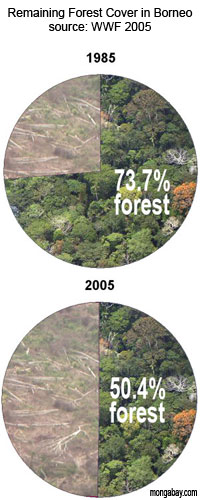
The above statement is a testament to the degree of logging in Borneo over the past 20 years or so. The island has seen some of the most intensive logging ever recorded in a tropical forest with extraction sometimes exceeding 240 cubic meters per hectare (the Amazon averages 23 cubic meters per hectare). This intensity of logging was eventually the industry's undoing: the timber market crashed in both Malaysia and Indonesia within the past 15 years. Still forestry is still important on the island today, especially in Kalimantan and Sarawak where large number of people still work for logging companies, generating hundreds of millions of dollars for the local economy. Here's a brief look at logging in Borneo. For more information I suggest looking at the references at the bottom of this page.
History
Logging took off first in Malaysian Borneo, then in Indonesian Kalimantan. Both countries saw a similar boom and bust cycle driven by government subsidies of roads and processing facilities and easy credit. Illegal logging was widespread in both countries.
Malaysia
In the early 1990s at least one-third of log exports from Malaysia were illegal, including 40 percent of timber sent to Japan. Illegal logging is still an issue in Malaysia, though far less than in Indonesia. Most of Malaysia's involvement in the illegal timber trade today is through wood smuggling and illicit operations in other countries, especially Indonesia. Malaysian firms are complicit in illicit harvesting in Kalimantan -- timber is sometimes smuggled across the border and then shipped as "Malaysian" wood.
| Region |
1992 |
1993 |
1994 |
1995 |
4-year total |
| Sabah |
2,064,000 |
293,000 |
0 |
6,000 |
2,363,000 |
| Sarawak |
6,363,000 |
4,922,000 |
4,463,000 |
3,902,000 |
19,650,000 |
The decrease in timber taken from Sarawak and Sabah is directly the result of declining forest cover and increasing environmental regulation.
Indonesia
Illegal logging is a much bigger problem in Indonesia where an estimated 70-75 percent of timber is harvested illegally, costing the government hundreds of millions to billions in lost tax income. East Kalimantan alone is thought to lose out on $100 million per year in revenue with well over half of wood production being illegal.
According to WWF, illegal logging in Indonesia is driven by several factors:
- Excess saw mill capacity in Indonesia and Malaysia. Both Malaysia and Indonesia still have facilities to process large amounts of timber even though wood production has declined since the halcyon days of the 1990s. WWF reports that the two countries have the capacity for about 58.2 million cubic meters of wood per year, yet legal production forests can only supply about 25.4 million cubic meters. The shortfall is made up by illegally harvested timber.
- Lack of local concern about illegal logging. WWF notes that most people in Borneo aren't particularly worried about illegal logging. In fact, the scarcity of jobs means that the average person would welcome a job in the forestry sector, whether the operation is legal or not.
- Local political interests and corruption. Logging, legal or illegal, creates jobs and stimulates the local economy in the short term, something almost no politician is going to reject. Further, enterprising officials can make a healthy living lining their pockets with the proceeds of illegal timber. The culture of corruption was cemented during Suharto's reign and continues today.
- Economics. CIFOR (2004) notes that legal wood costs $85 per cubic meter to deliver to the saw mill for large firms, whereas the cost of illegal timber is $32. For small concession holders, the costs are $46 and $5, respectively. It is simply much cheaper to use illegal timber. As WWF put it, "The financial benefits derived from illegal logging are more lucrative than from legal logging."
FEATURED ARTICLES LOGGING IN BORNEO
Indonesia should convert logging concessions to protected areas to stop deforestation for plantations, argues study (09/05/2013) Reclassifying logging concessions as permanent forest estates and thereby barring them from conversion to industrial plantations would be an effective strategy for helping conserve Indonesia's fast-dwindling forests, argues a new study published in PLoS ONE. The study analyzed forest loss in areas zoned for different uses in Indonesian Borneo. It found that deforestation rates in timber concessions and protected areas were 'not significantly different' provided logging concessions were not reclassified as industrial plantation concessions.
80% of rainforests in Malaysian Borneo logged
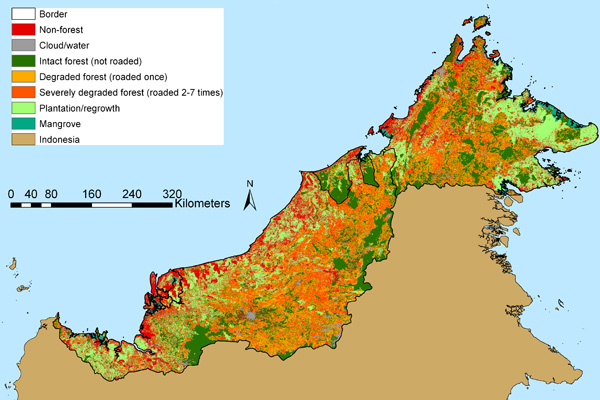
 (07/17/2013) 80 percent of the rainforests in Malaysian Borneo have been heavily impacted by logging, finds a comprehensive study that offers the first assessment of the spread of industrial logging and logging roads across areas that were considered some of Earth's wildest lands less than 30 years ago. The research, conducted by a team of scientists from the University of Tasmania, University of Papua New Guinea, and the Carnegie Institution for Science, is based on analysis of satellite data using Carnegie Landsat Analysis System-lite (CLASlite), a freely available platform for measuring deforestation and forest degradation. It estimated the state of the region's forests as of 2009.
Industrial logging leaves a poor legacy in Borneo's rainforests
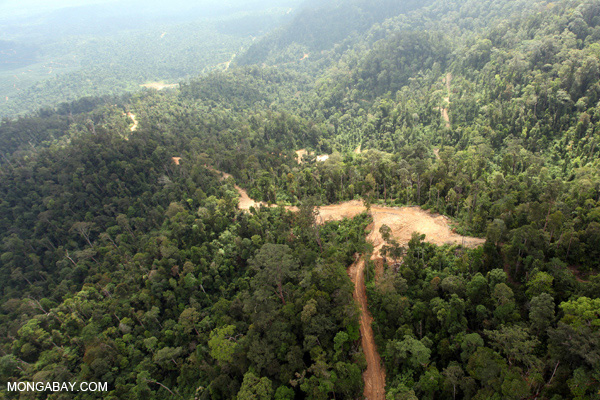
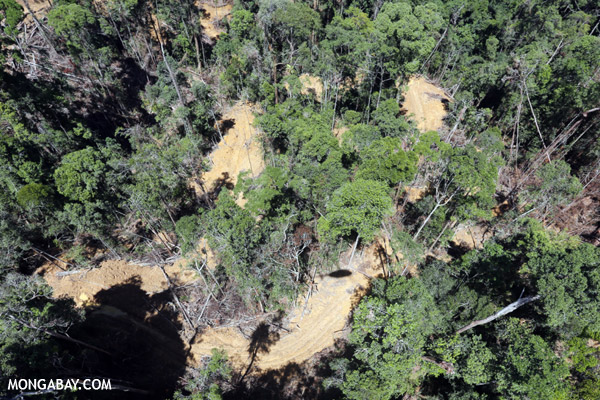
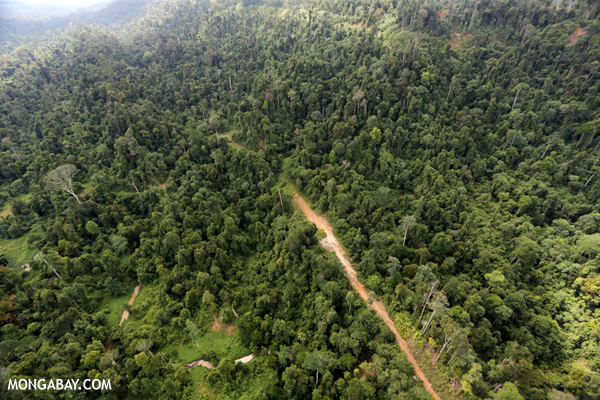
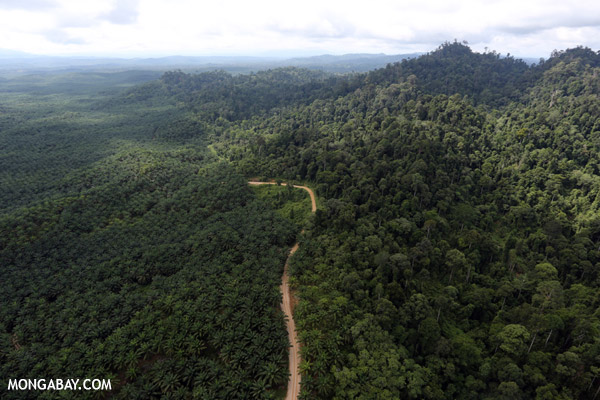
 (07/17/2012) For most people "Borneo" conjures up an image of a wild and distant land of rainforests, exotic beasts, and nomadic tribes. But that place increasingly exists only in one's imagination, for the forests of world's third largest island have been rapidly and relentlessly logged, burned, and bulldozed in recent decades, leaving only a sliver of its once magnificent forests intact. Flying over Sabah, a Malaysian state that covers about 10 percent of Borneo, the damage is clear. Oil palm plantations have metastasized across the landscape. Where forest remains, it is usually degraded. Rivers flow brown with mud.
LOGGING PHOTOS from BORNEO 


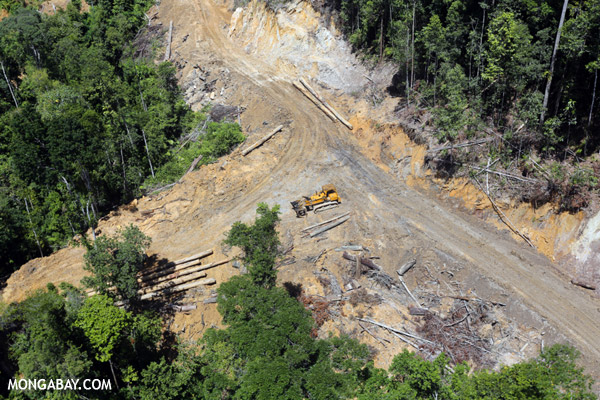


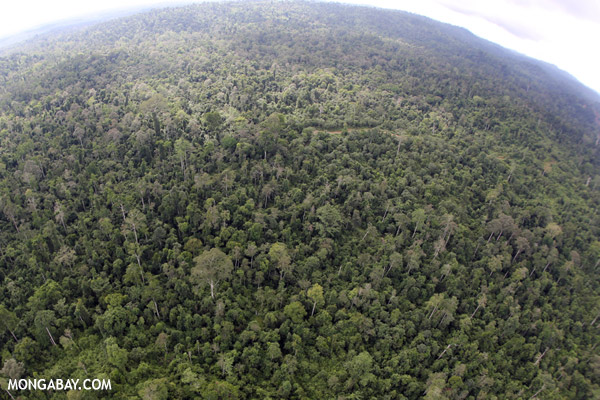
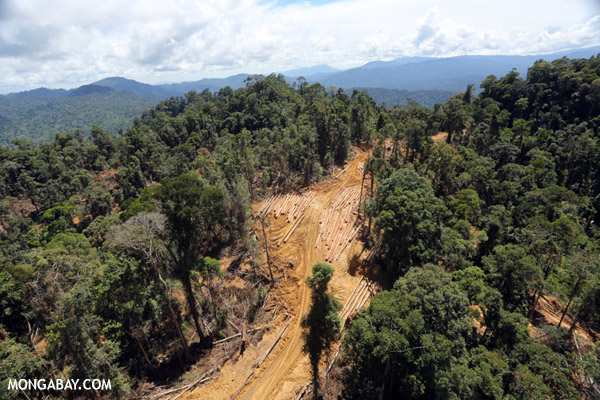
![Illegal logging operation in Borneo [kalteng_0215]](http://mongabay.s3.amazonaws.com/indonesia/600/kalteng_0215.jpg)


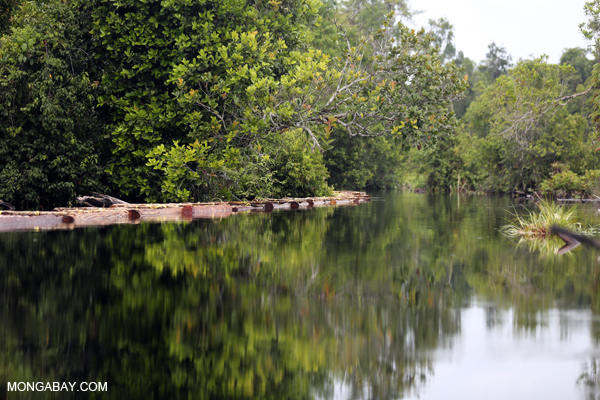
![Chopped down rainforest tree [kalbar_1038]](http://s3.amazonaws.com/mongabay/indonesia/600/kalbar_1083.jpg)



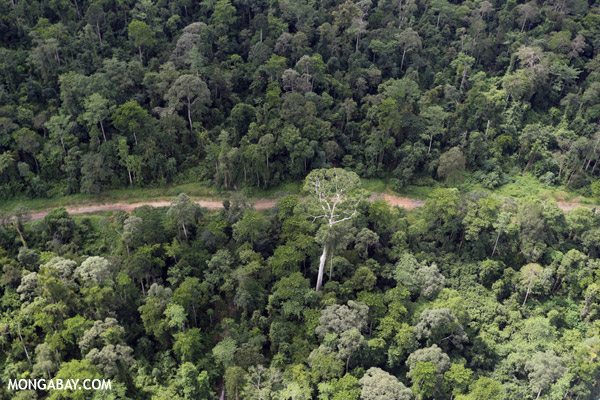
![Illegal logging in Borneo [kalteng_0300]](http://mongabay.s3.amazonaws.com/indonesia/600/kalteng_0300.jpg)





![Illegal logging operation in Borneo [kalteng_0235]](http://mongabay.s3.amazonaws.com/indonesia/600/kalteng_0235.jpg)


![Illegal logging in Borneo [kalteng_0302]](http://mongabay.s3.amazonaws.com/indonesia/600/kalteng_0302.jpg)
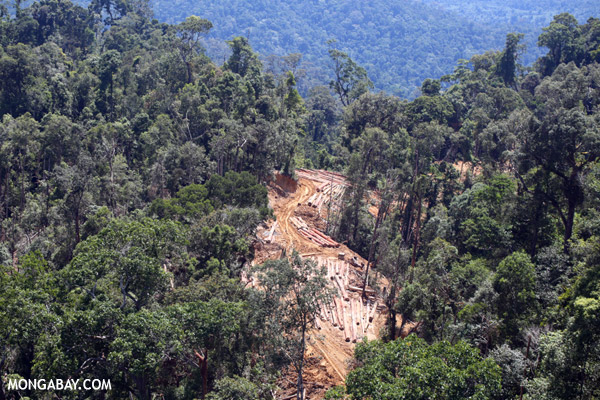

![Illegal logging in Borneo [kalteng_0347]](http://mongabay.s3.amazonaws.com/indonesia/600/kalteng_0347.jpg)
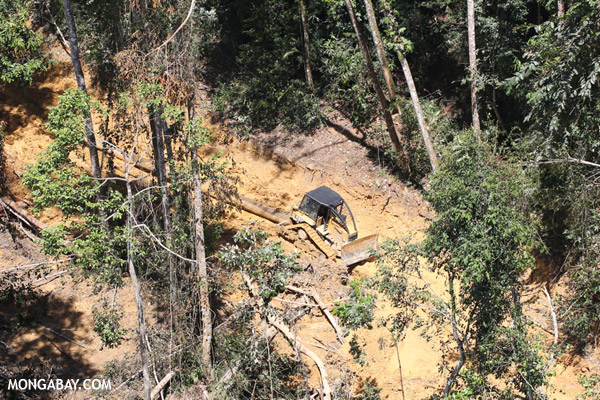


For more see Logging