FEATURED ARTICLES [Latest news updates]
Photos from Kenya
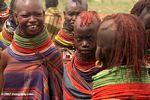
(10/26/2007) Earlier this month I visited Kenya including the Turkana District (Lokichoggio, Kakuma refugee camp, and outlying areas); Mt. Kenya; Nairobi; the Maasai Mara; and the Loita Hills.
[
Kenya photos]
2007 Amazon fires among worst ever
|
|
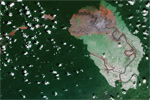
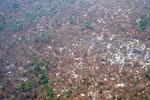
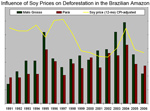
(10/22/2007) By some measures, forest fires in the Amazon are at near-record levels, according to analysis Brazilian satellite data by mongabay.com. A surge in soy and cattle prices may be contributing to an increase in deforestation since last year. Last year environmentalists and the Brazilian government heralded a sharp fall in deforestation rates, the third consecutive annual decline after a peak in 2004. Forest loss in the 2006-2007 season was the lowest since record-keeping began in the late in 1970s. While the government tried to claim credit for the drop, analysts at the time said that commodity prices were a more likely driver of slow down: both cattle and soy prices had declined significantly over the previous months.
[
Amazon | Brazil | Deforestation | Forest fires]
Is Amazon conservation worth more than clearing for cattle or soy?
|
|
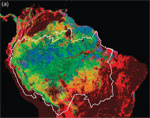
(10/17/2007) Through a proposed "avoided deforestation" framework, protecting the Amazon rainforest for its carbon value could be worth more than clearing it for logging, cattle pasture or industrial soy farms. Further, because standing forest confers ancillary benefits -- including option value, biodiversity preservation, and other ecosystem services -- avoided deforestation would do more than help mitigate climate change.
[
Amazon | Avoided deforestation | Carbon finance]
Conservationists need to work with, not against, rural poor

|
|
(10/25/2007) Rural populations have long been demonized by conservationists, but this is changing. Increasingly, conservation groups see that without the support of rural populations, protected areas can in places be little more than ineffective "paper parks". As such, today community involvement is viewed as a critical part of any conservation program, whether it be protecting biodiversity, slowing deforestation, curtailing illegal logging and poaching, or establishing reserves.
[
Conservation | Interviews | Poverty alleviation | Suriname]
Does palm oil alleviate rural poverty in Malaysia?
|
|
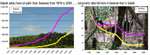
(10/24/2007) While it is often argued that the economic benefits of oil palm plantations outweigh the environmental costs of converting biodiverse ecosystems to monocultures, new analysis suggests that the role of plantations in reducing rural poverty may be overstated.
[
Malaysia | Deforestation | Palm oil]
Photos from Tanzania
(10/15/2007) Earlier this month I visited Tarangire National Park and the Ngorongoro Crater in Tanzania.
[
Photos]
Amphibian extinction may be worse than thought
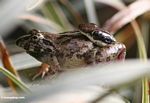
(10/31/2007) Amphibian extinction rates may be higher than previously thought, according to new DNA analysis that found more than 60 unrecognized species in the Guiana Shield of South America.
[
Amphibian crisis | Extinction]
Dutch: no subsidies for biofuels-driven rainforest destruction
|
|
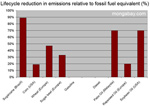
(10/31/2007) The Dutch government will exclude palm oil from "green energy" subsidies as growing evidence suggests that palm oil is often less sustainable than advertised. Key to the decision was research presented by Wetlands International that showed the climate impact of the conversion of carbon-rich peat lands for oil palm plantations. Wetlands found that peat lands conversion and associated fires maybe be responsible for emissions of more than 2 billion tons of carbon dioxide in some years, making Indonesia the third largest emitter of greenhouse gases despite having the world's twenty-second largest economy.
[
Palm oil | Deforestation]
Agriculture is primary driver of mangrove destruction
|
|
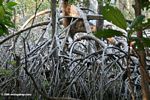
(10/31/2007) Agricultural expansion -- not shrimp farming -- is driving the rapid destruction of the world's mangrove forests, reports a new study published in the Journal of Biogeography. Analyzing more than 750 Landsat satellite images across Asia, researchers found that 81 percent of mangrove deforestation from 1975 to 2005 was the result of agricultural encroachment. Aquaculture (12 percent) and urban development (2 percent) were secondary drivers of the destruction of these biologically important ecosystems.
[
Mangroves | Deforestation]
Guarded optimism for recovery of the threatened Amur tiger

|
|
(10/31/2007) In a world where many animals are under siege, the Amur tiger -- popularly known in the West as the Siberian tiger -- offers an encouraging message: the population of the huge cat is showing signs of recovery. During the past 100 years, the Amur tiger population of the Russian Far East was decimated by forest destruction, trophy hunting and poaching for tiger body parts for use in traditional Chinese medicine. By the 1940s the number surviving had dwindled to an estimated 50. Recent surveys indicate that between 331 and 370 adult tigers and 100 young -- about 450 tigers in all -- are living in the Russian Far East, home to 95 percent of all Amur tigers in the world.
[
Tigers | Happy-upbeat environmental | Wildlife]
Boreal forest fires important source of emissions
(10/31/2007) Forest fires in the boreal forests of Canada are an important source of greenhouse gas emissions reports a new study published in the journal Nature.
[
Canada | Boreal forests | Forest fires | Carbon dioxide]
WSJ inquiry pushes FSC to cancel logging certification in endangered forest
(10/31/2007) An inquiry by The Wall Street Journal prompted the Forest Stewardship Council (FSC), an environmental body that runs a widely accepted "green" labeling system for forestry products, to effectively revoke certification for a Singapore-based Asia Pulp & Paper Co. (APP) project on the Indonesian island of Sumatra.
[
Certification | Deforestation | Logging | Sumatra]
Iguanas Listen to Birds to Avoid Predators
|
|
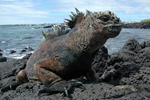
(10/30/2007) As the world's only sea-feeding lizard, Galapagos Marine Iguanas have long held a unique place in the animal kingdom. While most of their life is spent on land, these lizards forage the seas for their staple food: algae. Now, new research has provided this species with another distinction: although the Galapagos Marine Iguana is mute, it recognizes and utilizes the alarm call of the Galapagos Mockingbird. This is the first instance of a non-vocal species eavesdropping on another species' calls. Both the iguana and mockingbird fall prey to the Galapagos hawk, so by recognizing the mockingbird's warning the iguanas gain important information on avoiding predation.
[
Animal behavior | Ecological beauty]
Satellite Tracking of Fires in Madagascar Could Help Protect Lemurs
|
|
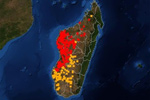
(10/30/2007) Every year as much as one-third of Madagascar, one of the planet's most biodiverse islands, goes up in flames. Now a new tool gives scientists the ability to monitor and track Madagascar's fires in real-time through the Internet. The new Fire Alert System – a collaborative effort between Madagascar's ministry of Environment, the International Resources Group, and Conservation International with USAID funding -- allows anyone with an Internet connection to see where fires are burning. The system includes email alerts that notify subscribers when a fire has been detected in a specified area.
[
Madagascar | Fires]
Scientists Find Treatment for Killer Frog Disease

|
|
(10/30/2007) New Zealand scientists have found a treatment for a disease blamed for the death of millions of amphibians worldwide, according to a report from BBC News. However, at best, the cure would only be applicable to captive populations. The disease is killing many amphibians in apparently pristine habitats.
[
Amphibian crisis | Extinction]
Avoided deforestation beats timber, palm oil, in tax revenue for Indonesia
(10/29/2007) Indonesia could more than double its tax revenue by protecting forests and selling the resulting carbon emission credits instead of timber and palm oil, a University of Michigan researcher told Bloomberg.
[
Avoided deforestation | Indonesia]
Despite fire risk, more Americans building near forests
(10/29/2007) While much of the world is seeing an urbanization trend, U.S. housing density around national forests is expected to rise by 2050, reports a study from the U.S. Forest Service. The shift could put more people at risk of devastating forest fires and increase pressure on forests and the services they provide.
[
Forest fires | United States]
Rainforest site launches in Spanish
(10/27/2007) The rainforest site is now available in Spanish. The children's version is still available in Spanish.
[
mongabay in non-English languages]
Children's site launches in Serbo-Croatian
(10/27/2007) The rainforest site for children is now available in Serbo-Croatian. I still need help with other languages.
[
mongabay in non-English languages]
Global warming puts primates at greater risk

|
|
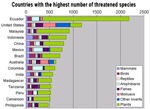
(10/25/2007) 29 percent of the world's primate species are in danger of going extinct warns a new report from the Primate Specialist Group of IUCN's Species Survival Commission (SSC) and the International Primatological Society (IPS). Titled Primates in Peril: The World's 25 Most Endangered Primates 2006-2008, the report says that climate change could exacerbate the many threats already facing primates: deforestation, wildlife trafficking, disease outbreaks, and commercial hunting.
[
Conservation | Primates | Endangered species]
Worst mass extinctions occur when temperatures are the warmest
|
|
(10/24/2007) Warming temperatures could trigger a mass extinction event, warn scientists writing in the latest issue of Proceedings of the Royal Society B. Comparing ancient records of marine and terrestrial diversity with historical temperature estimates, researchers from the Universities of York and Leeds found a close correlation between Earth climate and extinctions over the past 520 million years: higher extinction rates occur at higher temperatures.
[
Biodiversity | Climate change | Extinction and climate change | Extinction]
North Atlantic carbon sinks absorbing less CO2
(10/23/2007) The capacity of the North Atlantic ocean to absorb atmospheric carbon dioxide (CO2) has declined significantly since in the mid 1990s, report researchers from the University of East Anglia. The findings raise concerns that oceans may be slowing their uptake of CO2, potentially worsening the climate impact of greenhouse gas emissions.
[
Carbon dioxide | Climate Change]
Honda sees no future for plug-in hybrid vehicles
(10/23/2007) Honda Motor Co. Chief Executive Takeo Fukui said plug-in hybrid gasoline-electric vehicles offered too few environmental benefits to be worth pursing for the Japanese car company, according to the Wall Street Journal. Instead Fukui suggested that improved batteries would be better used for electric vehicles.
[
Automobiles | Hybrid cars]
Carbon sinks failing to keep up with emissions
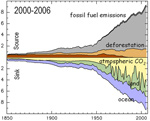
(10/22/2007) Atmospheric carbon dioxide (CO2) growth has increased 35 percent faster than expected since 2000, report scientists writing in Proceedings of the National Academy of Sciences. Worryingly, more than half the increase came from a decreased efficiency of natural land and ocean sinks to absorb CO2 from the atmosphere. The reminder came from a slowing in the efficiency of use of fossil fuels.
[
Carbon dioxide | Climate Change]
Amazon plant diversity still a mystery
|
|
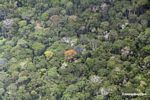
(10/21/2007) The Amazon is one of the few places on the earth that still evokes an accurate sense of mystery. While the Taiga, Antarctica, and Sahara may compare to the Amazon in wilderness size, none hold the same mystique of unknown species. It is believed that one third of the world's species inhabits this tropical rainforest. The only region comparable in mystery (though not in species) may be the world's oceans.
[
Amazon | Biodiversity]
Uncontacted Amazon tribe spotted by plane in Peru
(10/21/2007) A group of uncontacted indigenous tribesmen were spotted by plane in a remote part of the Peruvian Amazon last month, according to Survival International. The region is threatened by illegal mahogany loggers.
[
Amazon | Indigenous people | Peru]
Brazil to search for oil in the Amazon
Brazil's plan to seek oil in the Western Amazon has upset environmentalists, reports the Associated Press (AP). The National Petroleum Agency, or ANP, plans to put US$36 million toward oil and gas exploration in Acre, a state bordering Bolivia, according to Brazilian state media Agencia Brasil, but environmental officials say no impact study has been done to assess how the plan could affect the Amazon.
[
Brazil | Oil]
Uganda cancels controversial rainforest logging plan
(10/18/2007) Uganda's government abandoned a controversial plan to grant protected rainforest land to a sugar company, reports Reuters.
[
Africa | Uganda]
Costa Rica gets $26M debt-for-nature swap
(10/18/2007) Under an agreement signed Wednesday by the governments of the United States and Costa Rica together with environmental groups, $26 million of Costa Rican debt will be forgiven in exchange for tropical forest conservation. The debt-for-nature swap comes under the Tropical Forest Conservation Act of 1998, legislation intended to allow eligible developing countries to forego paying back debt owed to the U.S. in exchange for supporting local tropical forest conservation activities.
[
Conservation | Costa Rica]
Elephants use smell to distinguish hunters from farmers
(10/18/2007) Elephants can determine whether a human is a friend or foe by their scent, reports new research published in Current Biology.
[
Animal behavior | Elephants]
Soy in the Amazon [external]
(10/18/2007) After two weeks with farmers and ranchers in the Brazilian state of Mato Grosso, Pat Joseph has written an excellent article on soy in the Amazon. Published in The Virginia Quarterly Review, Joseph shows that while vilified by international environmentalists, soy growers in the Amazon are a hard-working and proud group that struggle against economics, pests, and wild swings in the price of their crop.
[
The Virginia Quarterly Review]
Congo pygmies to meet World Bank President Zoellick over forest destruction
(10/17/2007) A delegation of 'Pygmies' from Democratic Republic of Congo are visiting Washington this week to discuss World Bank-sanctioned logging of their rainforest home. The 'Pygmies' are scheduled to meet with bank President Robert Zoellick, according to the Rainforest Foundation, a lobby group that sponsored the trip.
[
Congo | Indigenous people]
Scientists find fish that literally lives in trees
(10/17/2007) Scientists have found a fish that literally lives in trees, according to research published in The American Naturalist and highlighted in New Scientist Magazine.
[
Animal behavior | Ecological beauty | Fish]
Black jellyfish, strange marine species discovered in deep ocean
(10/17/2007) An expedition to an unexplored deep ocean basin south of the Philippine Islands has turned up a trove of previous undiscovered species including a black jellyfish, a transparent sea cucumber, and a tentacled worm that resembles a squid.
[
Oceans | Species discovery]
Climate change will impact U.S. economy
(10/16/2007) Climate change will have a significant economic impact on the United States, reports a new study published by researchers from the University of Maryland. The report, The U.S. Economic Impacts of Climate Change and the Costs of Inaction, aggregates and analyzes previous economic research in order to develop a better estimate of the costs of climate change.
[
Climate change | United States]
Amazon rainforest burning "worst" in memory
|
|
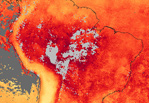
(10/16/2007) Fires continue to rage in the Amazon, according to local reports. John Cain Carter, a rancher who runs Aliança da Terra, an environmental accountability group for agricultural operators, says that the fires are the worst he has ever seen in the region. "I have never seen fires this bad," he told mongabay.com. "The fires are even worse than in 1998's El Niño event." NASA satellite images released at the end of September confirm widespread burning in the Amazon state of Mato Grosso.
[
Amazon | Brazil | Fires]
Snake uses trick to avoid poisoning from toxic frogs
(10/16/2007) An Australian snake employs a special feeding behavior to avoid poisoning by toxic frogs, reports The American Naturalist. University of Sydney scientists Ben Phillips and Richards Shine found that the northern death adder not only distinguishes between different species of toxic frogs, but modifies its feeding behavior to enable it to eat species that rely on different poisons and defensive strategies.
[
Animal behavior | Herps]
World Bank offers $300M for forest conservation, emissions reductions
|
|
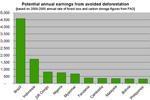
(10/15/2007) Tropical forest countries will be eligible for payments for preventing deforestation under a program unveiled last week by the World Bank. Called the Forest Carbon Partnership Facility (FCPF), the fund will initially provide $300 million to finance emissions reductions through forest conservation initiatives. The World Bank said the program will "help developing countries build the technical, regulatory, and sustainable forestry capacity to reduce emissions from deforestation and degradation.
[
Avoided deforestation | Carbon finance | Rainforests]
Most popular news articles for September
(10/15/2007) The most popular mongabay.com news articles for September.
[
news.mongabay.com]
Return to the U.S. & Blog Action Day
(10/15/2007) I'm back after an extended visit to East Africa and will be posting pictures and articles later this month. Meanwhile, in recognition of "Blog Action Day" for the environment, here are three organizations that are using innovative approaches to protect the environment and help rural populations.
First photos of a wild South China Tiger in 34 years
(10/14/2007) While there has been proof that the South China Tiger still lives in the Shaanxi province--sightings by locals, findings of footprints, hair, and teeth--there has been no photographic evidence of this species since 1964. But on October 3rd a local farmer, Zhou Zhenglong, took a total of 71 pictures of a South China Tiger in the wild. For his efforts the farmer received a payment of 20,000 yuan.
[
Tigers | Happy-upbeat environmental | Jeremy Hance]
Fires rage in Amazon rainforest park
(10/04/2007) Forest fires are raging in Xingu National Park in the Amazon rainforest, according to a pioneering cattle rancher-turned-conservationist in the Brazilian state of Mato Grosso. John Cain Carter, founder of Alianca da Terra, one of the most innovative organization working in the Amazon, told mongabay.com that fires burning in Xingu National Park in the Amazon are presently among the worst he has seen in a decade in Brazil.
[
Amazon | Brazil | Fires]
Biodiesel demand could destroy world's forests
(10/04/2007) Growing demand for biodiesel could drive large-scale forest conversion for energy crops, warns a study published in Conservation Biology. With petroleum supplies expected to peak in the next 5-30 years and growing concern over climate change, biodiesel production may expand by 100-fold by 2050, estimates Lian Pin Koh, a researcher from Princeton University.
[
Biofuels | Deforestation | Palm Oil]
Forests reduce flooding
(10/04/2007) While conventional wisdom holds that forests help buffer against catastrophic flooding, there has been little evidence to support such notions. A 2005 report by the Food and Agricultural Organization of the United Nations (FAO) and the Center for International Forestry Research (CIFOR) cited this lack of evidence and argued that flood mitigation efforts though forest preservation could not be justified on economic grounds. Now, a new study, published in the journal Global Change Biology, suggests that forests do impact the occurrence and severity of destructive floods. A prominent researcher is already calling the new work a "landmark study" in support of forest conservation.
[
Forests | Conservation | Happy-upbeat environmental]
South American development plan could destroy the Amazon
(10/04/2007) A plan to link South America's economies through a series of infrastructure projects, could destroy much of the Amazon rainforest, warns a study by conservationists.
[
Amazon | Deforestation | Rainforests]
Rainforest tribe establishes massive sustainable-use reserve
(10/04/2007) An indigenous group in Guyana has established one of the world's largest sustainable forest reserves, reports Conservation International.
[
Indigenous people | Guyana | Conservation | Happy-upbeat environmental]
Successful relocation of villagers from wildlife sanctuary
(10/01/2007) The Bhadra Wildlife Sanctuary is located in India's Western Ghats mountain range. The sanctuary contains some of India's most celebrated and endangered wildlife, including the Bengal Tiger and Asian Elephant. In addition to containing some of India's richest biodiversity, the sanctuary was at one time home to thirteen villages that increasingly affected, and were affected by, their protected surroundings. In 2002 eleven of these thirteen villages were relocated to two towns outside of the sanctuary.
[
India | Conservation | Happy-upbeat environmental]
11 new species discovered in Vietnam's Green Corridor
(10/01/2007) On September 26th, scientists from World Wildlife Fund announced the discovery of eleven new species: one snake, two butterflies, five orchids, and three other plants in Vietnam's biologically rich Green Corridor. The discoveries were made between 2005 and 2006.
[
Vietnam | Species discovery | Happy-upbeat environmental]