FEATURED ARTICLES [Latest news updates]
Carbon for forests will help Aceh recover from war, tsunami
|
|
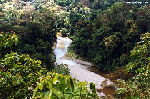
(09/18/2007) Carbon credits through forest conservation will play an important role in Aceh's recovery from decades of civil war and the devastating 2004 tsunami, which left more than 167,000 people dead and 500,000 homeless in the Indonesia province, said Aceh governor Irwandi Jusuf in meeting in San Francisco.
[
Indonesia | Carbon finance | Happy-upbeat environmental]
Rainforest countries form pact to push global warming solutions

|
|
(09/14/2007) Eight tropical countries containing 80 percent of the world's remaining tropical forest cover have formed an alliance to have forest conservation included in a post-Kyoto agreement on climate change, reports the Financial Times. The "Forestry Eight", as the group is called, includes Brazil, Malaysia, Papua New Guinea, Gabon, Cameroon, Costa Rica, Congo and Indonesia.
[
Carbon finance | Deforestation | Rainforests]
16,306 species threatened with extinction

|
|
(09/12/2007) 16,306 of 41,415 species on the IUCN Red List are threatened with extinction, reports the World Conservation Union (IUCN). The total number of known extinct species now stands at 785, while a further 65 are only found in captivity or in cultivation. One in four mammals, one in eight birds, one third of all amphibians and 70% of the world's assessed plants on the 2007 IUCN Red List are considered at risk.
[
Biodiversity | Extinction | Wildlife]
Can remittances and globalization help the environment?
|
|
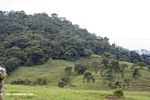
(09/6/2007) Globalization and other economic trends appear to be helping the degraded forests of El Salvador recover, reports new research that evaluated the impact of global trade, land policy changes, and remittances on forest cover. The study, by Susanna B. Hecht of University of California at Los Angeles and Sassan S. Saatchi of the California Institute of Technology, used socioeconomic data, land-use surveys, and satellite imagery to document significant increases in the area of El Salvador covered by both light woodlands and forest since peace accords were signed in the warn-torn country in 1992.
[
Agriculture | Deforestation | Featured | Forests | Poverty alleviation]
Tree resprouting offers hope in former pastures of Brazil's cerrado
|
|
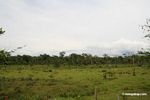
(09/6/2007) Deforested landscapes in the Brazilian cerrado show hopeful signs of recovery even after long periods of intensive use, reports a study published in the journal Biotropica. Analyzing the natural reestablishment of native trees in former pastureland located in the dry woodlands of the Brazilian cerrado, a team of researchers found that while species richness was lower in older pasture, density and composition of regenerating trees did not change with pasture age.
[
Agriculture | Brazil | Cerrado | Reforestation]
Chupacabra story is a hoax; likely a Xolo dog breed
|
|
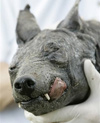
(09/4/2007) An alleged chupacabra carcass found in Texas is likely a hoax to sell T-shirts say dog experts. A leading breeder says that periodic reports of chupacabra and other mythological beasts probably do more harm than good: "These animals are often diseased, malnourished, or abused. Now we have people shooting these animals on site, manipulating their corpses, and calling them fantastic beasts. We need to bring people's attention to the real issues: abuse, neglect, and unscrupulous breeders."
[
Strange | United States]
Investigation finds destruction of orangutan habitat for oil palm in Borneo
|
|
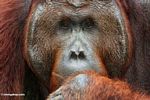
(09/2/2007) An Associated Press investigation found evidence of workers opening up rainforest land for new oil palm plantations in the heart of Borneo. According to the AP, a leading plantation firm, Singapore-based Wilmar International Ltd., admitted to clearing trees on forest land, though said it does not clear "high value rain forests" for development.
[
Indonesia | Palm oil | Borneo | Biofuels | Deforestation]
Rare Chinese river dolphin sighting in question
(08/31/2007) A prominent researcher is skeptical of last week's reported sighting of the baiji, the Chinese river dolphin declared extinct earlier this year, according to the New York Times. The sighting near Tongling city in Anhui Province -- widely reported in Chinese and Western media -- was captured on video. Dr. Robert L. Pitman of the National Oceanic and Atmospheric Administration's Fisheries Ecosystem Studies Program said Chinese scientists question that the video shows a baiji at all.
[
Extinction | China]
Environmentalists and palm oil producers should work together
(09/25/2007) Editorial published in the Jakarta Post: Environmentalists and palm-oil producers are increasingly at odds. Greens groups say palm oil is driving the conversion of tens of thousands of hectares of peatlands and lowland forest in Indonesia, putting wildlife at risk, increasing the vulnerability of forests to fires, and triggering large emissions of greenhouse gases.
[
Indonesia | Palm oil | Happy-upbeat environmental]
Mongabay.com on hiatus
(09/18/2007) Please note: I am unavailable for the next few weeks. Updates will be sporadic until around October 15, 2007, after which regular posts should return. In the meantime, below are some recent featured articles. Thank you for your patience and interest. Rhett Butler.
September
Carbon for forests will help Aceh recover from war, tsunami
Do Costa Rica's payments for environmental services work?
Rainforest countries form pact to push global warming solutions
16,306 species threatened with extinction
Can remittances and globalization help the environment?
Tree resprouting offers hope in former pastures of Brazil's cerrado
Chupacabra story is a hoax; likely a Xolo dog breed
Investigation finds destruction of orangutan habitat for oil palm
Rare Chinese river dolphin sighting in question
August
Guidelines to ensure biofuels production won't hurt the environment
NGOs should use palm oil to drive conservation
How private equity can profit from carbon offsets in Indonesia
Indonesia to push carbon-credits for peatlands conservation
European blood-sucker falls victim to global warming
Could peatlands conservation be more profitable than palm oil?
Biofuels driving destruction of Cerrado savanna in Brazil
Could a hurricane hit California?
Conservation more effective than biofuels for fighting global warming
Climate change claims a snail
Amazon deforestation rate falls to lowest on record
An interview with Dr. Alex Dehgan: Adventures in conservation: protecting wildlife in Afghanistan
Alaska photos
Do Costa Rica's payments for environmental services work?
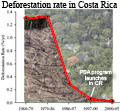
(09/17/2007) While Costa Rica is now known as a world leader for conversation policies and ecotourism, the Central American country had some of the world's highest deforestation rates prior to establishing its reputation. Clearing for cattle pasture and agriculture destroyed much of the country's biodiverse rainforests in the 1960s and 1970s. In the 1990s Costa Rica set a new course; one that sought to unlock the value of its ecosystems. While ecotourism was the most obvious path, Costa Rica also pioneered the development of payments for environmental services ("PSA" or pagos por servicios ambientales). In 1996 the country established a program to compensate landowners for keeping forests intact and reforesting degraded areas. A new study, published in Conservation Biology, examines these efforts.
[
Costa Rica | Ecosystem services | Environmental economics]
Northwest Passage now open for business

|
|
(09/15/2007) Melting sea ice has opened the Northwest Passage in the Arctic to navigation, reports the European Space Agency. The clearing allows direct access between the North Pacific and North Atlantic and could eventually be a cheaper shipping route that the Panama Canal. Scientists say the Northeast Passage -- north of Russia -- may soon also be navigable due to disappearing sea ice
[
Arctic-Greenland | Sea Ice]
Indonesian-language site updated
(09/15/2007) Two editorials on the Indonesian carbon market have been added to the Indonesian-language site.
[
Non-English languages]
Environmentalists announce support for carbon trading
(09/14/2007) A coalition of environmental groups announced it will support the development of carbon trading policies that help protect tropical rainforests and other important ecosystems, noting that "conservation alone has proven no match for commerce."
[
Carbon finance | Deforestation | Rainforests]
Arctic sea ice thickness only half of 2001 level
(09/14/2007) Arctic sea is thinning and disappearing, report German researchers. An Alfred-Wegener-Institute for Polar and Marine Research expedition to the North Polar Sea found that large areas of the Arctic sea-ice are only one meter thick this year -- half the thickness found in 2001. The findings support concerns that large expanses of polar ice could soon disappear from the Arctic during summer months.
[
Arctic-Greenland | Sea Ice]
38 key global environmental indicators worsen - report
(09/14/2007) Consumption of energy and many other critical resources is consistently breaking records, disrupting the climate and undermining life on the planet, according to the latest Worldwatch Institute report, Vital Signs 2007-2008.
[
Environment]
Bush aides say mankind responsible for global warming
(09/14/2007) Dr. John Marburger, President George W. Bush's chief scientific advisor, said it is more than 90 percent certain that greenhouse gas emissions to blame for rising global temperatures, according to BBC News.
[
Environmental politics]
China urged to join sustainable soy efforts in the Amazon
|
|
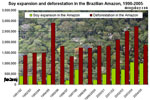
(09/12/2007) Brazilian soy crushers have urged China to join an alliance to promote sustainable soybean production in the Amazon, according to Reuters. Brazil, soon to be the world's largest producer of soybeans, recently formed the Global Roundtable on Responsible Soy Association as concerns grow that global demand for biofuels will level the Amazon rainforest. Environmentalists say demand from China is playing an important role in surging soybean production in the region.
[
Amazon | Amazon soy | Certification]
Arctic sea ice melts to all-time record low
(09/12/2007) Sea ice cover in the Arctic Ocean is presently 20 percent below its all time lowest extent and may decline further before winter, said scientists from the National Snow and Ice Data Center in Boulder (NSIDC).
[
Animal behavior | Birds]
Wind power takes a toll on migratory bats
|
|
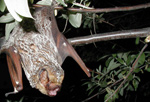
(09/12/2007) The danger of wind turbines to birds has long been known and well documented. Most recently several studies and articles have attempted to place the level of bird casualties in perspective: "More birds killed by cats than wind turbines". But lesser known--and lesser studied--is the effect wind turbines have on bat populations. Collisions between groups of bats and wind turbines have been observed at numerous turbines in America, Australia, and Europe. While these fatalities, sometimes killing hundreds of bats, have been seen for years, their cause remains unknown.
[
Bats | Wind power]
Clean energy will improve health of the world's poor
(09/12/2007) Clean energy will help people live longer and healthier lives reports a study published in The Lancet. The research recommends a switch from fossil fuels towards renewable energy and improved access to electricity for the world's poor.
[
Clean energy | Poverty alleviation]
World needs a 10% meat diet to fight global warming
(09/12/2007) Cutting world meat consumption by 10 percent would have a substantial impact on greenhouse emissions, say doctors writing in the health journal The Lancet.
[
Agriculture | Global warming mitigation]
Global warming is killing trees in California parks
(09/12/2007) A new study ties a 22 percent increase in mortality among trees in the California Sierra Nevadas to a temperature-driven increase in drought.
[
California | Forests | Impact of climate change]
Bird flies 7,150 miles in a week
(09/11/2007) The bar-tailed godwit (Limosa lapponica baueri) makes the longest non-stop migratory flight of any bird species in the world, reports a new study.
[
Animal behavior | Birds]
Land-clearing fires send smoke across Argentina, Paraguay
(09/11/2007) Thousands of fires likely set for land-clearing are sending thick smoke over southern South America, reports NASA.
[
Fires | Remote sensing]
Wolves push out coyotes in wilderness areas

|
|
(09/11/2007) Coyote densities are more than 30 percent lower in areas they share with wolves, according to a paper published in the most recent edition of the Journal of Animal Ecology. The results show that wolves limit the range and number of coyotes in an area. Nevertheless coyotes are not threatened by recovering wolf populations. In fact, coyotes thrive in human altered landscapes, even urban areas.
[
Animal behavior | Wildlife]
Slash-and-burn undermines timber prices in Indonesia
(09/11/2007) Illegal slash-and-burn activities undermined Indonesian timber prices this summer, reports the International Tropical Timber Organization (ITTO).
[
Indonesia]
Better fine collection would cut illegal logging in the Brazilian Amazon
(09/11/2007) Brazil needs to substantially increase the collection of fines in order to have any impact on slowing illegal logging in the Amazon rainforest, reports a new study from the Man and Environment Institute of the Amazon (IMAZON).
[
Amazon | Brazil | Environmental law]
Gray whale populations only a fraction of historic level
|
|
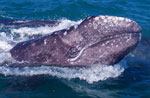
(09/10/2007) The current population of gray whales is one-third to one-fifth of the number found in the Pacific before industrial whaling began in the 19th century, reports a new study based on genetic analysis. The results challenge the widely held belief that gray whale populations have returned to their pre-whaling abundance and also shed light on the sensitivity of whales to climate change.
[
Whales]
Two new species of salamander discovered in Panama
|
|
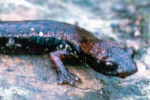
(09/7/2007) Scientists have discovered two new species of salamanders from the mountainous Costa Rica-Panama border region. The findings, published by David B. Wake, Jay M. Savage, and James Hanken in the journal Copeia, push the number of salamanders known in the region to 24, making it a hotspot in terms of salamander biodiversity. Dr. Hanken, a herpetologist at Harvard University, says that while the discovery of new species is encouraging, salamanders and other amphibians are declining in Central America.
[
Amphibians | Species discovery]
Australia puts $100M toward protecting forest in Borneo
|
|
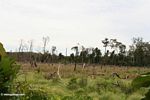
(09/7/2007) Australian and Indonesian ministers signed a AU$100 million ($82M) deal to protect highly threatened forests on the island of Borneo, according to the Sydney Morning Herald. Funds will go towards conservation and rehabilitation of degraded forests and peatlands.
[
Conservation | economics]
Carbon tax, not subsidies, will spur nuclear power

|
|
(09/7/2007) A U.S. carbon tax, not government subsidies, should be used to spur investment in nuclear power, says The Economist. In its "Leaders" editorial section, the UK-based financial publication states that concerns over global warming and energy security may well spawn a new era for nuclear power, but that tax-payers should not be asked to foot the bill for building plants as they have in the past.
[
Energy | Economics]
Two-thirds of polar bears at risk of extinction by 2050
|
|
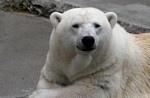
(09/8/2007) Two-thirds the world's polar bears could be threatened with extinction by 2050 due to melting sea ice, said U.S. government scientists Friday. U.S. Geological Survey scientists said that the United States (the north coast of Alaska) and Russian would likely lose all of their polar bear populations. The only bears expected to survive would be those in the northern Canadian Arctic islands and the west coast of Greenland. Overall, bears are forecast to lose 42 percent of the Arctic range they need to hunt and breed during summer months.
[
Polar bears]
Education key to financial support for biodiversity
|
|
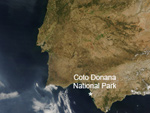
(09/7/2007) On the coast of south-western Spain, Coto Donana National Park posses a unique wealth of wildlife; its proximity to Africa has allowed for several African species to mix with a wide variety of European: Egyptian Mongooses and the Greater Flamingo live alongside wild boar and Spanish Red Deer. The coastal and wetland park provides a continual respite for hundreds of species of African and European birds. As well, the park is home to several endangered species including the Spanish Imperial Eagle, the Andalusian toothcarp, the Sabine (a variety of juniper pine), and the world's most endangered cat, the Iberian Lynx.
[
Conservation | economics]
Experts forecast large decline in Arctic sea ice
|
|
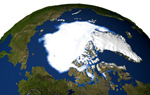
(09/7/2007) Summer sea ice off Alaska's north coast will likely shrink to nearly half the area it covered in the 1980s by 2050, report scientists from the National Oceanic and Atmospheric Administration. The loss of ice would have a significant impact on mammals dependent on sea ice, including polar bear and walrus.
[
Greenland-arctic | Sea ice]
Congress urged to protect big cats, endangered dogs

|
|
(09/7/2007) Efforts to protect many of the world's largest and most endangered wild relatives of cats and dogs recently moved a step closer to victory with a congressional hearing on the Great Cats and Rare Canids bill. Today's hearing was the first since the bill's introduction in 2004, according to the Wildlife Conservation Society and other environmental groups which support this legislative initiative.
[
Big cats]
Environmentalists may use Endangered Species Act to pressure gov't on global warming
(09/7/2007) The addition of elkhorn and staghorn corals to the Endangered Species Act due to threats from climbing ocean temperatures, may be environmentalists' best weapon for levering the U.S. government into action on global warming, writes Mark Clayton of The Christian Science Monitor.
[
Endangered species | Environmental politics]
Felix Death Toll Washes Up on Coastline
(09/7/2007) Nicaraguan and Honduran officials have announced that upwards of 100 people are confirmed dead, and another 120 still unaccounted for after Hurricane Felix made landfall earlier this week.
[
Hurricanes]
Disappearing bees linked to virus
|
|
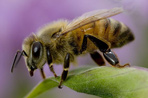
(09/6/2007) Scientists have linked the disappearance of tens of billions of bees to a virus, reports a study published in the 7 September issue of the journal Science. Colony collapse disorder (CCD), in which colonies inexplicably lose all of their worker bees, has been blamed for the loss of 50-90 percent of colonies in beekeeping operations across the U.S.
[
Insects | United States]
Toddlers have higher social cognition skills than apes
(09/6/2007) Toddlers have more sophisticated social learning skills than their closest primate relatives, researchers report in the 7 September issue of the journal Science.
[
Primates]
U.S. has 957 billion tons of coal on government land
(09/5/2007) Wednesday, U.S. government agencies announced the country has about 957 billion tons in coal reserves on federal lands. More than half the total lies in Montana and Wyoming. Additional reserves are found on private lands.
[
Coal]
Malaysia suffers big drop in shorebird populations
(09/5/2007) Malaysia suffered a big drop in shorebirds, reports a new study by Wetlands International. The environmental group attributes the 22 percent decline between 1983-1986 and 2004-2006 to destruction of habitat for aquaculture, agriculture, industry, housing and recreation.
[
Birds]
Rebels invade Congo gorilla sanctuary, park rangers evacuated
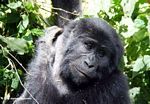
(09/4/2007) Guerrillas have invaded Virunga National Park in the Democratic Republic of Congo, causing park rangers to flee, and leaving critically endangered mountain gorillas at great risk, reports Wildlife Direct, a group that promotes wildlife protection through blogs by rangers and conservationists. Forces loyal to rebel general Laurent Nkunda attacked Jomba and Bikenge patrol posts in Virunga National Park, pillaging weapons and communications equipment four days after Rugira Sebuja Faustin, a park ranger, was killed during an attack on a patrol post north of Rushuru.
[
Congo | Gorillas | Wildlife]
Amazon River in Peru falls to second lowest level on record
|
|
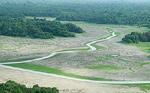
(09/4/2007) The Amazon River in Peru has fallen to its second lowest level on record according to the Peruvian Navy's Hydrographic and Navigation Service. The news comes as worries mount that the Amazon rainforest will face another dry year like that of 2005 when large tracts of forest burned and river commerce came to a standstill.
[
Amazon river | Peru | Drought]
$400/ton carbon tax needed to curb aviation emissions
(09/4/2007) European Union proposals to reduce the climate impact of aviation will fail unless there is a substantial rise in carbon prices, concludes analysis by the Tyndall Centre, a UK-based climate research body. Friends of the Earth, an environmental lobby group, funded the study.
[
Greenhouse gas emissions | Global warming mitigation]
Felix: first time two Category-5 storms hit land in same season
(09/4/2007) Hurricane Felix made landfall in Nicaragua around 7:45 a.m. Eastern Time as a Category 5 storm with top winds at 160 mph (260 km/h), according to the U.S. National Hurricane Center.
[
Hurricanes]
Loss of livestock breeds put food supplies at risk in poor countries
|
|
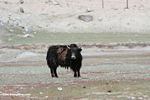
(09/3/2007) A number of rare livestock breeds face extinction, a prospects the weakens genetic diversity and could be the food supply at risk in some parts of the world, warns a new report from the Consultative Group on International Agricultural Research (CGIAR). The group calls for the immediate establishment of genebanks to conserve reproductive material from the most threatened breeds.
[
Agriculture | Cattle ranching]
Industrial pollution acidifies ocean, threatens marine animals
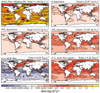
(09/3/2007) Ocean acidification, already a concern due to rising levels of carbon dioxide, is worsening due to nitric acid and sulfuric acid from industry, report researchers writing in this week's issue of the journal Proceedings of the National Academy of Science. Using atmospheric and oceanic computer models, scientists led by Scott C. Doney of the Woods Hole Oceanographic Institution found that fossil-fuel combustion and agriculture result in atmospheric deposition of reactive sulfur and nitrogen in coastal waters of North America, Europe, and South and East Asia.
[
Ocean acidification | Oceans | Pollution]
Climate change drove human evolution
(09/3/2007) Climate change appears to have been a significant driver of human evolution, report researchers writing in this week's issue of the journal Proceedings of the National Academy of Science. Studying deep sediment cores from Lake Malawi in Africa, Syracuse University professor Christopher Scholz and colleagues found evidence to suggest that the transition from a long dry period susceptible to extreme drought to a stable, wetter climate may have stimulated the expansion and migration of early human populations.
[
Africa | Impact of Climate Change | Evolution]