FEATURED ARTICLES [Most recent articles]
Conservation biology needs to be accessible to the masses
|
|
(05/31/2007) Since its earliest days, when private collectors amassed great stores of specimens collected from the farthest reaches of the Earth, natural history studies often have been a pursuit of the economically well-off and of intellectually elitist scientists. One of the most important spinoffs of these natural history studies has been Conservation Biology. Unfortunately, the culture of exclusivity appears to have also infected Conservation Biology. Technical jargon, restricted access to data, and poor communication among researchers, amateur enthusiasts and political decision-makers have colluded to keep it a clubby affair that may be hurting goals of sustainable use of resources, long term management policies, and species and habitat conservation.
[
Conservation]
An interview with biologist Luke Hunter:
Sound science and practical interventions key to saving big cats
|
|
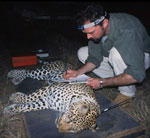
(05/23/2007) Big cats are some of Earth's largest and most threatened predators. Long persecuted as perceived threats to livestock and humans, hunted for their skins and purported medicinal values, and losing critical habitat to deforestation and conversion for agriculture, big cat populations have dwindled around the world for the past century. Given these trends, it should come as no surprise that big cats have become the focus of conservation efforts. Not only are large predators often the most vulnerable to human pressures and the first to disappear from ecosystems, but efforts to conserve them effectively help protect thousands of other species that share their habitat. At the forefront of these efforts in Dr. Luke Hunter, a biologist with the Wildlife Conservation Society (WCS) where he heads their Great Cats Program. In a May 2007 interview with mongabay.com, Hunter discussed strategies for conserving carnivores and offered insight for students interested in pursuing careers in conservation science.
[
Carbon Finance | Rainforests | Global Warming Mitigation]
U.S. ethanol may drive Amazon deforestation
|
|
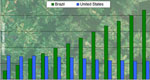
(05/17/2007) Ethanol production in the United States may be contributing to deforestation in the Brazilian rainforest said a leading expert on the Amazon. Dr. Daniel Nepstad of the Woods Hole Research Center said the growing demand for corn ethanol means that more corn and less soy is being planted in the United States. Brazil, the world's largest producer of soybeans, is more than making up for shortfall, by clearing new land for soy cultivation. While only a fraction of this cultivation currently occurs in the Amazon rainforest, production in neighboring areas like the cerrado grassland helps drive deforestation by displacing small farmers and cattle producers, who then clear rainforest land for subsistence agriculture and pasture.
[
Ethanol | Amazon]
Reducing tropical deforestation will help fight global warming
(05/09/2007) More scientists have joined the growing chorus to support a plan by developing countries to fight global warming by reducing deforestation rates. Tropical deforestation releases more than 1.5 billion metric tons of carbon into the atmosphere every year, though in some years, like the 1997-1998 el Niño year when fires released some 2 billion tons of carbon from peat swamps alone in Indonesia, emissions are more than twice that. Writing in the journal Science, an international team of scientists argue that the "Reducing Emissions from Deforestation" (RED) initiative, launched in 2005 by the United Nations Framework Convention on Climate Change, is scientifically and technologically sound, and that political and economic challenges facing the plan can be overcome.
[
Carbon Finance | Rainforests | Global Warming Mitigation]
An interview with lemur expert Dr. Patricia Wright:
Conservation is saving lemurs and helping people in Madagascar

|
|
(05/07/2007) Madagascar, an island nation that lies off the coast of southeastern Africa, has long been famous for its unique and diverse species of wildlife, especially lemurs--primates found nowhere else on the planet. In recent years, the island country has also become world-renowned for conservation efforts that are succeeding in spite of extraordinary pressures from a poor population that relies heavily on forest burning for basic subsistence. A large part of this success is due to the early efforts of Patricia Wright, a primatologist who has been working in the country for more than 20 years. Wright led the effort to launch the country's leading protected area and helped Madagascar become a leading global example of conservation despite its economic adversity.
[
Madagascar | Lemurs | Interviews | Conservation]
Amazon rainforest locks up 11 years of CO2 emissions
|
|
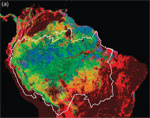
(05/08/2007) Using a new method to determine the amount of carbon stored by vegetation, a team of scientists from Caltech, the Woods Hole Institute, and INPE (Brazil's space agency) estimate the total biomass of the Amazon Basin is around 86 petagrams (86 billion metric tons) of carbon--for comparison, 7.9 billion metric tons of carbon dioxide were emitted in 2005. This means that Amazon locks up at least 11 years of recent carbon dioxide emissions, though clearing the Amazon would have a disproportionate impact due to its role in global weather regulation and other ecosystem services.
[
Amazon | Carbon Sequestration]
Commercial hunting may be biggest threat to rainforests
|
|
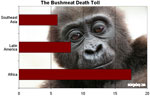
(05/02/2007) Commercial hunting is decimating wildlife populations across the tropics and may be one of the gravest threats presently facing rainforests, reports a series of studies published in the May issue of the journal Biotropica. The research reveals that large-scale loss of wildlife is already affecting forest health and regeneration.
[
Threats to the rainforest | Hunting]
Mites are the primary source of poison arrow frog toxins
(05/14/2007) Mites -- not ants as long believed -- appear to be the primary source of toxins used by poison arrow frogs to defend against predators, reports new research published in the early online edition of Proceedings of the National Academy of Sciences (PNAS).
Poison dart frogs, colorful amphibians with skin secretions so toxic that they are used by indigenous populations to poison the tips of hunting arrows, are one of several groups of animals capable of sequestering deadly compounds from dietary sources without being harmed. Until now, it was believed that ants were the primary source of these defensive skin alkaloids in frogs.
[
Amphibians | Herps]
Carnivorous plants invade San Francisco

|
|
(05/14/2007) While most plants derive nutrients from soil, some trap and consume living creatures for their primary source of sustenance. Now a special exhibit at the San Francisco Conservatory of Flowers offers a journey into the strange world of carnivorous plants. More than 600 species of carnivorous plants are distributed across the globe, including dozens of species in the United States.
[
Plants]
9 Atlantic hurricanes expected in 2007
(05/31/2007) Hurricane forecaster William M. Gray of the Colorado State University updated his hurricane predictions for the 2007 storm season, expecting 17 named storms and nine hurricanes in the Atlantic basin. The forecasts were unchanged from his last bulletin.
[
Climate Change | Environmental Politics]
Monsoon pattern linked to climate change
(05/31/2007) Researchers have constructed a 155,000 record of monsoon history. The findings could help climatologists better understand the impact of climate change on monsoon patterns, which play a critical role in agriculture for hundreds of millions of people.
[
Climate Change]
HSBC invests $100M in global warming research
(05/31/2007) HSBC announced Wednesday it would spend $100 million on climate change research. The investment, which will go to the Climate Group, Earthwatch Institute, Smithsonian Tropical Research Institute (STRI) and WWF over a five year period, is the largest donation ever made by a British company.
[
Happy-Upbeat Environmental]
Bush unveils global warming strategy
(05/31/2007) Thursday, President Bush outlined his proposal for reducing greenhouse gas emissions, calling for a series of meetings between the world's largest polluters to establish a global target for emissions reduction. The Associated Press reported that environmentalists quickly dismissed the plan as a "do-nothing" approach, while other critics said the plan comes too late to restore the administration's credibility after years of dragging its feet and outright rejecting action on global warming.
[
Climate Change | Environmental Politics]
Global warming may be key factor in frog deaths

|
|
(05/30/2007) Three papers published in this week's issue of the journal Nature debate the proximate causes for the global decline of amphibians, but nonetheless reveal mounting concerns among scientists over the continuing disappearance of frogs, salamanders, and their relatives. Two papers criticize a 2006 paper led by ecologist Alan Pounds, which argued that the primary factor of amphibian decline is the deadly chytrid fungus Batrachochytrium dendrobatidis, the outbreak of which is worsening due to climate change.
[
Amphibian Crisis]
Tasmania agrees to logging moratorium
(05/30/2007) Forestry Tasmania, the forest service of Tasmania, has signed an agreement with environmental activists to cease logging activities in the Upper Florentine Valley of the island. The moratorium will last through federal elections this in October.
[
Australia | Logging]
Cheetah are unfaithful mates
(05/30/2007) Female cheetah are highly promiscuous reports a new study by Zoological Society of London (ZSL) scientists.
[
Animal Behavior]
Does drought cause war?
(05/30/2007) A new study links drought to the outbreak of war, reports New Scientist Magazine.
[
Drought]
Will Amazon drought worsen in 2007?
|
|
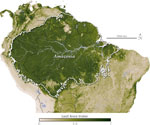
(05/30/2007) Contrary to popular belief, the Amazon rainforest is not rainy year round. Further from the equator, rainfall is more seasonal, with dry periods that sometimes last for months. In the Southern Amazon, a region that has suffered the brunt of deforestation due to clearing for cattle pasture and agriculture, April or May mark the beginning of the dry season. Rains usually return in September or October, though in recent years, dry seasons have been prolonged, with increasingly severe impacts on the forest ecosystem. In 2005 and 2006 the Amazon experienced the worst droughts on record as thousands of square kilometers of land burned for months on end, releasing more than 100 million metric tons of carbon into the atmosphere.
[
Amazon]
Carbon dioixde emissions charts updated
(05/30/2007) I updated the carbon dioxide emissions and energy usage charts to reflect new data.
[
Charts]
Mongabay-kids launches in German
(05/29/2007) Thanks to Sarah Stosno, the rainforest site for children is now available in German, in addition to 16 other languages.
[
world.mongabay.com]
Australia andNew Zealand Pictures
(05/29/2007) I added some pictures from Nancy Butler's trip to Australia and New Zealand earlier this year.
[
Travel]
New snake-like lizard discovered in India
|
|
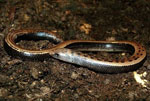
(05/28/2007) A previously unknown species of legless lizard as been discovered in a remote Indian forest, reports the Associated Press. Sushil Kumar Dutta, leader of a team of researchers from NGO Vasundhra and the North Orissa University, found the 7-inch long creature in the forests of Khandadhar near Raurkela in Orissa state, about 625 miles southeast of New Delhi.
[
Species Discovery]
Hurricanes occur during cool periods as well
(05/28/2007) A team of scientists have found evidence of intense hurricane activity during both cool and warm periods reports The New York Times. The findings suggest that factors other than sea temperature play a role in the formation and intensity of tropical storms.
[
Hurricanes]
Indonesia could earn $100-$180 million from carbon trading
(05/28/2007) Indonesia says it hopes to soon see millions of dollars from carbon trading, reports the International Tropical Timber Organization (ITTO) in its latest update.
[
Indonesia]
Chinese support shark conservation, but still demand shark fin
(05/25/2007) There is growing public support in China for shark conservation measures, but little understanding of the role of shark finning in declining shark populations, reveals a survey by WildAid, an environmental group.
[
Sharks]
Ecuador looks for payments to leave oil in the ground
(05/24/2007) Marketwatch reported more details on Ecuador's proposal to forgo development of Amazonian oil fields in exchange for payments from industrialized nations. Last month Ecuadorian President Rafael Correa said that if the South American country is compensated with half of the forecasted lost revenues, it will not exploit oil in Yasuni National Park, setting aside the area for wildlife and indigenous people. Correa said the cost would be about $350 million per year.
[
Ecuador | Carbon finance | Oil]
EU will demand sustainable biofuel production
(05/24/2007) The European Commission is planning new criteria to ensure that biofuels are produced in an environmentally-friendly manner, reports Reuters. The move comes a month after the Dutch issued voluntary guidelines for biofuel production.
[
Biofuels]
Experts: Borneo in urgent need of protection
|
|
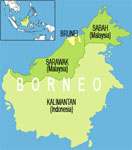
(05/23/2007) A prominent group of 1500 scientists in over 70 countries have called for the urgent conservation of Borneo's forests, which are fast-disappearing on the southeast Asian island due to logging, fires, and conversion for oil palm plantations. Wednesday the Association for Tropical Biology and Conservation (ATBC), the world's largest scientific organization devoted to the study and sustainable use of tropical ecosystems, passed a formal resolution in support of immediate conservation action on the island.
[
Borneo]
First U.S. offshore wind farm wins preliminary approval
(05/23/2007) The first offshore wind farm in the United States won preliminary approval Tuesday from a panel of Delaware state officials. According to published reports, four Delaware state agencies ordered Delmarva Power, an electric utility, to buy wind-generated power from Bluewater Wind, the wind farm's developer.
[
Wind Power]
China city officials to get $258,000 bonus for environmental gains
(05/23/2007) Shanxi Province in China will pay city government officials 2 million yuan ($258,000) each if they are able to pull their cities out of the ranking of China's five most polluted cities, reports China state media. Cities that see their air quality improve 10 spots in the national ranking system, world reward city heads 2 million yuan ($258,000).
[
Greening of China]
Scientists find possible cure for global amphibian-killing disease
(05/23/2007) Scientists have discovered a possible treatment for the fungal disease that has killed millions of amphibians worldwide. Presenting Wednesday at the General Meeting of the American Society for Microbiology in Toronto, Professor Reid N. Harris at James Madison University reported that Pedobacter cryoconitis, a bacteria found naturally on the skin of red-backed salamanders, wards off the deadly chytridiomycosis fungus, an infection cited as a contributing factor to the global decline in amphibians observed over the past three decades.
[
Amphibian crisis | Happy-upbeat environmental]
Plan to bring lions, elephants to U.S. excludes Africans
(05/23/2007) Writing in the June 2007 Scientific American one of the scientists who helped put forth a radical proposal to reintroduce historical megafauna -- including camels, cheetah, elephants, and lions -- revisits the scheme, reviewing its basic points and refuting some of the criticism the plan received from the general public and other conservation biologists.
[
Wildlife | Conservation]
Uganda rainforest reserve safe, for now
|
|
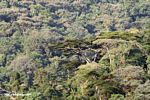
(05/23/2007) Uganda's cabinet has suspended a proposal to allow a sugarcane grower to convert part of Mabria rainforest reserve for a plantation, reports Reuters. The plan, a pet project of president Yoweri Museveni, faced widespread opposition that was capped by deadly riots. Reuters quotes Ugandan Environment minister Maria Mutagamba as saying the government had shelved the project pending a cabinet committee review.
[
Uganda | Happy-Upbeat Environmental]
IBM launches "greener" chip
(05/22/2007) IBM is touting the "green" credentials of its newest and most powerful microprocessor, the "Power6."
[
Technology]
CO2 emissions growth surges as global energy efficiency falls
|
|
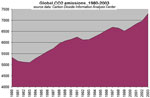
(05/21/2007) Worldwide growth in carbon dioxide emissions has doubled since the close of the 1990s, reports a study published in the early on-line edition of the Proceedings of the National Academy of Sciences. The findings suggest that the global economy is more dependent on fossil fuels than ever before, with carbon indensity--the amount of carbon needed to produce a unit of economic output--decreasing after a period of increases.
[
Carbon Dioxide | Fossil Fuels]
Photos of newborn baby giraffe at the Bronx Zoo
(05/21/2007) A baby giraffe born October 30, 2006 at the Bronx Zoo in New York is doing well reports the Wildlife Conservation Society (WCS). The youngster is the second offspring of Margaret Sukari, a 12-year old giraffe that lives on the African Plains' Giraffe Lawn at the zoo.
[
Happy-Upbeat Environmental]
Congo guerrillas threaten to kill rare gorillas
(05/21/2007) Fresh off killing a park ranger, a group of Congo guerrillas said they will slaughter highly endangered mountain gorillas in Congo's Virunga National Park if their demands for immunity aren't met, says WildlifeDirect, a wildlife conservation organization active in the region.
[
Congo | Gorillas]
Deforestation charts
|
|
(05/21/2007) Fresh off killing a park ranger, a group of Congo guerrillas said they will slaughter highly endangered mountain gorillas in Congo's Virunga National Park if their demands for immunity aren't met, says WildlifeDirect, a wildlife conservation organization active in the region.
[
Congo | Gorillas]
Deforestation charts
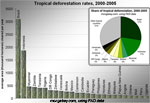
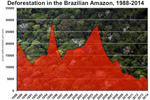
(05/21/2007) I aggregated many of the site's deforestation charts and graphs on a single page to make it easier to find these resources. These images are free for use in powerpoint presentations, slideshows and web sites provided that mongabay.com is credited as the source. I also updated the climate and energy charts page.
[
Deforestation charts]
Rare coelacanth captured in Indonesia
(05/20/2007) An Indonesian fisherman caught a coelacanth, a species so ancient it is called a "living fossil", off the coast of Sulawesi, Indonesia, according to the Associated Press. The fisherman managed to keep the specimen alive for 17 hours in a pool before it expired.
[
Fish]
Improving energy efficiency will require overcoming market distortions
(05/20/2007) In a new study, McKinsey & Company, one the world's most respected management consulting firms, reports that the world should be able to cut energy demand growth by half over the next 15 years without compromising economic growth. However it says that market forces along will not drive the transition—targeted policies will be needed to overcome present market failures and policy distortions..
[
Energy efficiency]
Abalone poaching drives meth drug trade in South Africa
(05/20/2007) Abalone poaching helps drive the methamphetamine trade in South Africa, reports an article in The Wall Street Journal.
[
Poaching]
High corn price mean pigs eat candy bars, french fries
(05/20/2007) Near record high prices for corn mean that farmers are feeding their pigs "people food" according to an article in The Wall Street Journal.
[
Agriculture]
Ancient Amazonian technology could save the world
|
|
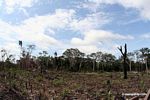
(05/18/2007) Terra preta, the ancient charcoal-based soil used by ancient Amazonians to create permanently fertile agricultural lands in the rainforest, is getting serious consideration as a means to fight global warming and meet domestic energy demand, reports an article in Scientific American.
[
Amazon | Saving the world]
Did asteroid wipe out America's first people?
(05/17/2007) An asteroid may have caused the near-extinction of North America's first humans, argues a series of studies to be presented May 24, at the American Geophysical Union's meeting in Acapulco, Mexico. Nature reports that while the theory has been discounted in the past, new research suggests that an comet or asteroid could have exploded above or on the northern ice cap some 13,000 years ago, plunging regional temperatures to plunge for the next 1000 years. The theory would also help explain the disappearance of the continent's large mammals, including woolly mammoths, American lions, and the saber tooth tiger.
[
Extinction]
Peru makes progress on illegal mahogany logging
(05/17/2007) Last month Inrena, Peru's environmental agency, implemented regulations for mahogany loggers that will now require forest concession holders to replant ten times the logged amount of trees. Overall, the initiative calls for the production and establishment of one million of mahogany plantlets over 5 years.
[
Peru | Logging]
US tropical hardwood imports fall 24% since 2002
(05/17/2007) The United States is importing considerable less tropical hardwood according to the International Tropical Timber Organization's (ITTO) Tropical Timber Market Report.
[
United States | Logging]
Southern Ocean may not absorb more CO2 emissions
(05/17/2007) Climate change has weakened one the Earth's largest natural carbon 'sinks' raising the possibility that increased warming could reduce the capacity of some systems to absorb carbon dioxide, reports a study published this week in the journal Science.
[
Carbon dioxide | Oceans]
Coral diseases largely result from human activities
(05/17/2007) The apparent increase in infectious disease among coral is likely the result of environmental change and, as such, researchers should focus on understanding the relationship between coral diseases and environmental changes, rather than the diseases themselves, argues a paper published in the August 2007 issue of the Journal of Experimental Marine Biology and Ecology.
[
Coral reefs]
16 cities to get energy-saving retrofits
(05/17/2007) Sixteen cities will get financing to make buildings "greener" through environmental renovations, former President Clinton announced Wednesday at the C40 Large Cities Climate Summit in New York, where mayors and local government officials are meeting to discuss strategies to flight global warming. The green building initiatives will cut carbon emissions and reduce waste.
[
Green design]
Mongabay.com topics upgrade
(05/16/2007) Some of you may have noticed already, but I've upgraded the news pages for various topics on mongabay.com. If you haven't used this feature, the filtering capability allows you to see only news for a specific topic (i.e. happy-upbeat environmental news, climate change, or species discovery, for example). These topic pages also display articles that don't make it to the mongabay.com homepage (about half of articles aren't posted on the homepage) as well as photos and background information for some subjects.
[
News topics]
Top ten threatened species named by WWF
(05/16/2007) The World Wildlife Fund (WWF) announced its top ten list for species in need of trade protection ahead of the upcoming Conference of the Convention on International Trade in Endangered Species (CITES) in The Hague, The Netherlands.
[
Endangered species]
Environmental concerns mount as palm oil production grows
|
|
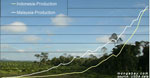
(05/15/2007) The booming market for palm oil is driving record production but fueling rising concerns over the environmental impact of the supposedly "green" bioenergy source. The two leading producers of palm oil, Malaysia and Indonesia, have rapidly expanded palm oil production in recent years, often at the expense of biodiverse rainforests and carbon-rich peatlands that store billions of tons of greenhouse gases. Environmentalists say that due to these factors, burning of palm oil can at times be more damaging the global climate than the use of fossil fuels.
[
Palm Oil | Biofuels]
Asian gangs fueling the illegal ivory trade
(05/15/2007) Vitalmiro Bastos de Moura, a Brazilian rancher charged with ordering the killing of Dorothy Stang, an American nun, in the Amazon rainforest in February 2005, was convicted today of murder and sentenced to 30 years in prison.
[
Amazon]
Asian gangs fueling the illegal ivory trade
(05/14/2007) Asian-run organized crime syndicates based in Africa are behind the rising illegal trade in elephant ivory, reports TRAFFIC, the wildlife trade monitoring network of WWF and IUCN-The World Conservation Union.
[
Environmental law | Environmental politics]
Canada's boreal forest stores 27 years of carbon
(05/14/2007) At a conference Monday, 1500 prominent scientists called for protection of Canada's boreal forest, one of the largest intact forest and wetland ecosystems remaining on the planet.
[
Boreal forests]
Urban parks can offset warming effects of climate change says study
(05/14/2007) Increasing the number of urban parks and street trees in a city could offset the local heat effects of global warming, reports a new study by researchers at the University of Manchester.
[
Environment]
California sues Bush administration over fuel standards
(05/13/2007) Monday California sued the Bush administration for "illegally adopting 'dangerously misguided' gas mileage rules." In a lawsuit backed by 11 states, the suit alleges that the Highway Traffic Safety Administration's new mileage standards violate federal law by ignoring both the environment environmental impact on oil use and the country's growing dependence on imported oil.
[
Automobiles | California]
Asian gangs fueling the illegal ivory trade
(05/13/2007) Asian-run organized crime syndicates based in Africa are behind the rising illegal trade in elephant ivory, reports TRAFFIC, the wildlife trade monitoring network of WWF and IUCN-The World Conservation Union.
[
Elephants]
Citigroup commits $50 billion to fight global warming
(05/13/2007) Citigroup said last week that it plans to spend $50 billion towards mitigating climate change, mostly through investments in clean energy and 'alternative technology' over the next 10 years.
[
Green Business | Global Warming Mitigation]
Climate shift in East Africa due to geology, not global climate change
(05/11/2007) A shift towards a drier climate in East Africa may be due to geological changes like the emergence of the Rift Valley, not global climate change suggests research published in the current issue of the journal Nature. Dr. Bonnie Jacobs, Chair of Environmental Science Program at Southern Methodist University (SMU) in Dallas, Texas, reports that the rise of the high Ethiopian plateau may have caused dramatic shifts in the region's vegetation.
[
Climate Change]
South Korea fishermen cheat on whale killing
(05/09/2007) Fishermen in South Korea are killing far more whales than they claim, reports an article in New Scientist Magazine. DNA fingerprinting of whale meat purchased in local markets suggests that South Korea caught 827 minke whales between 1999 and 2003, well above the 458 they reported.
[
Whales | Oceans]
Cuddly slow loris threatened by the pet trade
(05/09/2007) The slow loris, a big-eyed primate found in the rainforests of southeast Asia, is threatened by the international pet trade said ProFauna Indonesia, a wildlife activist group that has called for a ban on the illegal trafficking of the charismatic animal.
[
Wildlife]
UN warns on dangers of bioenergy
(05/09/2007) Biofuels offer "an extraordinary opportunity" to reduce greenhouse gas emissions but could make "substantial demands on the world's land and water resources at a time when demand for both food and forest products is also rising rapidly," said the U.N. in its first assessment on the growing bioenergy industry.
[
Biofuels | Bioenergy]
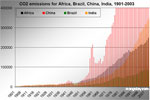
India's CO2 emissions leap 88% since 1990, China's 73%
|
|
(05/08/2007) The world is far behind carbon dioxide emissions targets set by the Kyoto Protocol reports the Little Green Data Book 2007, an annual publication put out by the World Bank. The publication notes that global carbon dioxide emissions have risen 19 percent since 1990, more than 25 percent behind goals set forth under the Kyoto Protocol, which called for a 5.2 percent reduction from 1990 levels.
[
Carbon Dioxide | Climate Change]
Massive oil palm expansion planned by Indonesia's richest man
(05/08/2007) Indonesia's richest man plans to spend $4 billion to expand his company's palm oil, energy, and pulp and paper holdings, according to a report from Reuters
[
Palm Oil | Indonesia]
Peatlands store 100 years of CO2 emissions
(05/08/2007) The UN Convention on Climate Change is putting global climate at risk by ignoring carbon dioxide emissions from the destruction of carbon-rich peatlands in Indonesia, charged Wetlands International, a Dutch environmental group that has highlighted the climate impact of land-use change in southeast Asia.
[
Carbon Dioxide | Indonesia]
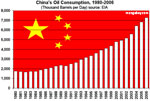
China finds 7.5 billion barrel oilfield
|
|
(05/08/2007) PetroChina, Asia's largest oil and gas producer, announced the discovery of a 7.5 billion barrel oil field off the northeast coast of China. The find, in an undersea field in Bohai Bay, is the largest in Asia in four decades and will boost China's known oil reserves by 20 percent. Nevertheless, the discovery will not be enough to offset China's oil imports, which have surged in recent years due to a booming economy and rapid adoption of automobiles.
[
Energy in China]
Senate panel sets 35 mpg car standard by 2020
(05/08/2007) Tuesday the U.S. Senate Commerce Committee approved a bill that would raise the passenger fleet automobile fuel standard to an average 35 miles per gallon by 2020, reports Reuters.
[
Automobiles]
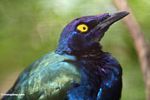
Global warming will affect migratory birds
|
|
(05/08/2007) 84 percent of migratory birds have the potential to be affected by climate change warned the United Nations Monday. Lowered water tables, changes in food supplies and prey range, rising sea levels, and increased storm frequency are the greatest threats to birds, said officials with the African Eurasian Migratory Waterbirds Agreement (AEWA) and the Convention on Migratory Species (CMS), two United Nations Environment Programme (UNEP)-led Treaties for the conservation of wildlife
[
Birds/a> | Impact of climate change]
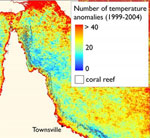
Global warming is killing coral reefs
|
|
(05/07/2007) A new study provides further evidence that climate change is adversely affecting coral reefs. While previous studies have linked higher ocean temperatures to coral bleaching events, the new research, published in PLoS Biology, found that climate change may increasing the incidence of disease in Great Barrier Reef corals. Ominously, the research also shows that healthy reefs, with the highest density of corals, are hit the hardest by disease.
[
Coral Reefs | Coral reefs and climate change]
Indonesia will plant 2 billion trees in 2007
(05/07/2007) Indonesia plans to rehabilitate 59.2 million hectares (146 million acres) of damaged forest throughout Indonesia, according to Malam Sambat Kaban, Indonesia's Forestry Minister.
[
Indonesia | Happy-Upbeat Environmental]
Indonesia may import timber due to supply shortage
(05/07/2007) Indonesia, the world's largest exporter of tropical timber, may need to import wood from neighbors due to supply shortages caused by a crack down on illegal logging and resource depletion, reports the International Tropical Timber Organization (ITTO).
[
Indonesia | Forestry]
Malaysia will reforest 4000 ha of forest in Borneo
(05/07/2007) Malaysia plans to rehabilitate 4000 hectares (10,000 acres) of damaged forest is Sabah state, on the island of Borneo, reports the Associated Press. The environmental restoration and management plan for the Ulu Semaga-Malua forests will cost $58 million.
[
Malaysia | Happy-Upbeat Environmental]
Deal to end destructive bottom trawling reached
(05/07/2007) Governments have reached a landmark agreement to end high seas bottom trawling in nearly a quarter of the world's oceans. Environmentalists say bottom trawling, which destroys reefs and depletes slow-growing fish species, is one of the world's most destructive fishing practices.
[
Oceans | Overfishing | Happy-Upbeat Environmental]
Better forest policies would reduce illegal logging in the Amazon
|
|
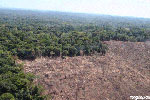
(05/06/2007) Brazil could improve sustainable forest management, reduce illegal logging, and perhaps cuts deforestation by introducing coherent policies for timber operations in the Amazon rainforest argues a new paper published in Frontiers in Ecology. However, successful implementation of sustainable timber production will require overcoming significant biological and political hurdles, suggest the authors.
[
Amazon | Brazil | Logging]
Driving along Brazil's Highway BR-163 [external]
(05/06/2007) Last week environmental group WWF featured an account of a drive along Brazil's BR-163 highway. BR-163 has served as a key driver of Amazon destruction over the past 35 years or so, providing access to thousands of colonists who cleared the land for cattle pasture. The Brazilian government is currently upgrading the road, a development that could worsen deforestation, says WWF.
[
WWF]
Cost of stabilizing climate 0.1% per year

|
|
(05/05/2007) The Intergovernmental Panel on Climate Change (IPCC) released its long awaiting installment on climate change mitigation, arguing that the costs of offsetting global warming will be much lower than some claim. The IPCC estimates that emissions can be reduced rapidly using existing technology at a cost of 3 percent of GDP, or 0.12 percent per year over the next 25 years, though new technologies could further reduce this cost. While the projections are encouraging, they may be conservative. Some analysts, including the well-respected Amory Lovins of the Rocky Mountain Institute, have calculated that emissions targets that would stabilize the climate could be achieved at no net cost and possibly even a profit. Even McKinsey & Company, a leading management consulting firm, agrees, putting the net cost of reducing emissions by 46 percent at zero.
[
Climate Change | Economics | Politics]
First ever photos of leopard with cub in Cambodia
(05/05/2007) WWF has captured the first ever photos of a wild leopard with cub in Cambodia. Leopards are exothermally rare in Cambodia, which has suffered one of the highest deforestation rates in southeast Asia due to illegal logging, clearing for agriculture, fires, and unsustainable hunting.
[
Wildlife]
Indonesia to be recognized in Guinness Book of World Records for deforestation rate
|
|
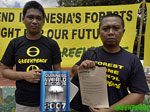
(05/04/2007) Greenpeace is using an novel marketing ploy to raise awareness about forest loss in Indonesia: the Guinness Book of World Records. The green group has convinced the publisher of to recognize Indonesia as the "country with the fastest rate of forest destruction on the planet." Indonesia's high rate of forest loss is largely the result of poor forest management and corruption. Each year thousands of hectares are illegally logged for timber and burned to establish oil palm plantations.
[
Indonesia]
Coral reef fish return home after drifting the seas

|
|
(05/03/2007) Most coral reef fish larvae return to their "home" reefs after spending weeks to months maturing in the open ocean, reports a new study published in the journal Science. The findings improve the understanding of coral reef ecosystems and have implications for marine conservation efforts.
[
Coral Reefs]
U.S. could offset 20% of emissions through reforestation of marginal lands
|
|
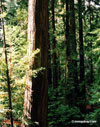
(05/03/2007) Reforesting marginal agricultural land could significantly slow the increase of carbon in the atmosphere reports a new study based on NASA data, though it would be no magic bullet in fighting global warming since temperate forests have been shown to increase regional temperatures by absorbing more sunlight. Still, reforestation has the potential to offer other ancillary benefits including watershed services and erosion control.
[
Carbon sequestration]
Climate change could dramatically change forests in Central America

|
|
(05/02/2007) Drought could cause dramatic shifts in rainforest plant communities in Central America, reports a new study published in the May 3 issue of Nature. The research shows that many rainforest plants are ill-equipped to deal with extended dry periods, putting them at elevated risk from changes in climate projected for the region.
[
Impact of Climate Change | Rainforests]
Budget cuts threaten Earth monitoring satellites
(05/02/2007) The American Association for the Advancement of Science (AAAS) warned that environmental satellites responsible for monitoring Earth are endangered due to budget cuts and shifts in spending towards military and human space flight programs.
[
Remote Sensing | Politics]
Madagascar's forests are recovering due to social institutions

|
|
(05/02/2007) Some of Madagascar's most biologically rich forests appear to be recovering according to research published in the open-access journal PLoS ONE. The study also offers new insight in the forces behind deforestation and the social context of reforestation efforts.
[
Madagascar | Happy-Upbeat Environmental]
Military technology uses satellite signals to catch poachers
(05/02/2007) The SUNY College of Environmental Science and Forestry describes a military technology that have been adapted for conservation use.
[
Poaching | Technology]
'Reign of terror' over Fish and Wildlife Service ends with resignation
(05/01/2007) Julie A. MacDonald, the deputy assistant secretary at the Interior Department who riled environmentalists by seeking to gut the endangered species act, has resigned. The resignation comes a month after MacDonald was rebuked for illegally distributing internal agency documents to industry lobbyists. Read a statement from biologists upset with the department's actions.
[
Environmental Politics | Endangered Species]
Malaysia and Philippines ban GIS map-making by tribes [external]
(05/01/2007) National Geographic reports that the governments of Malaysia and Philippines have banned the use of GIS systems by tribes seeking to map their territories for the purpose of making land claims. The strategy, used by the Amazon Conservation Team in the Amazon rainforest, has been shown to be an effective way to establish land rights as well as promote cultural ties between generations.
[
National Geographic]
Mother Jones covers extinction [external]
(05/01/2007) Mother Jones featured an article on mass extinction last week. Look for more articles on the subject over the coming months in mainstream media. March was mass extinction awareness month on mongabay.com. Articles included: the Peter Raven interview, Just how bad is the biodiversity extinction crisis?, Impact of global warming on extinction debated, World's only blue lizard heads toward extinction and others.
[
Mother Jones]
Facing extinction, amphibians fail to cope with global warming
(05/01/2007) Despite surviving the age of dinosaurs and numerous bouts of severe climate change, amphibians are not keeping pace with the current rate of global change, reports a new study published in the journal Bioscience.
[
Extinction and Climate Change | Climate Change | Amphibian crisis]