December 30, 2005
About 300 million Chinese drink unsafe water tainted by chemicals and other contaminants according to a new report from the Chinese government. Further, about 90% of China's cities have polluted ground water, while millions of rural Chinese face risks from naturally occurring contaminants like arsenic and excess fluorine.
December 28, 2005
Malaysia's deforestation rate is accelerating faster than any other tropical country in the world according to data from the United Nations. Analysis of figures from the Food and Agriculture Organization of the United Nations (FAO) shows that Malaysia's annual deforestation rate jumped almost 86 percent between 2000-2005 and the 1990-2000 period.
December 26, 2005
I am working on some major revisions so mongabay.com will not be updated as frequently as usual for the next ten days or so.
December 25, 2005
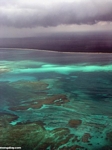
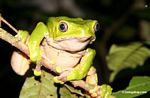
Rob Roy have traveled to interesting places around the world. Here are some of his photos from East Africa and Costa Rica.
December 24, 2005
A new study shows that the net benefits of eating wild Pacific salmon outweigh those of eating farmed Atlantic salmon, when the risks of chemical contaminants are considered. Generally, the vast majority of Atlantic salmon available on the world market is farmed (greater than 99%) while most Pacific salmon is wild-caught (greater than 80%).
December 23, 2005
Growing tree plantations to remove carbon dioxide from the atmosphere to mitigate global warming -- so called "carbon sequestration" -- could trigger environmental changes that outweigh some of the benefits, a multi-institutional team led by Duke University suggested in a new report. Those effects include water and nutrient depletion and increased soil salinity and acidity, said the researchers.
December 22, 2005
Apologies for the site being unresponsive for a period this morning -- mongabay.com's servers suffered a major denial-of-service (DOS) attack.
A plan by Panama and Colombia to build a transmission line through the Darien Gap has environmentalists and indigenous groups concerned over the potential environmental impact. The plan may require cutting a path of at least 130 feet wide through the rainforest, allowing access to Central America's most remote wilderness.
The entire rainforest section of mongabay.com is being revised. Look for an improved version sometime in January 2006.
December 21, 2005
The Caribbean experienced one of the most devastating coral bleaching events on record during September and October while hurricanes battered the Gulf of Mexico. In response, NASA and National Oceanic and Atmospheric Administration have sent a team to assess the situation. According to scientists in Puerto Rico, bleaching is both widespread and intense with colonies representing 42 species completely white in many reefs. Surveys show 85 to 95 percent of coral colonies were bleached in some areas, while reefs in Grenada suffered close to 70 percent bleaching in some areas.
The Bolivian government, The Nature Conservancy and the Bolivian conservation organization Fundaci--n Amigos de la Naturaleza announced that the Noel Kempff Mercado Climate Action Project is the first conservation-based initiative in the world to be fully certified for reducing greenhouse gas emissions using internationally accepted standards.
December 20, 2005
U.S. greenhouse gas emissions increased by 2 percent in 2004, from 6,983.2 million metric tons carbon dioxide equivalent in 2003 to 7,122.1 metric tons in 2004, according to Emissions of Greenhouse Gases in the United States 2004, a report released today by the Energy Information Administration.
Global warming could cause the top 10 feet (3 meters) or more of Arctic permafrost to thaw by 2100 according to new simulations from the National Center for Atmospheric Research. Melting could disrupt important ecosystems, damage roads and buildings, increase freshwater runoff into the Arctic Ocean and release large amounts of carbon into the atmosphere.
December 19, 2005
Research over the past year has shown that areas buffered by coastal forests, like mangroves, were less damaged by the 2004 tsunami than areas without tree vegetation. Accordingly, governments in tsunami-affected countries have proposed mangrove restoration projects along their coasts as a protective bioshield against storm damage. However, an article in this week's edition of Nature says that enthusiasm for mangrove restoration is waning in the face of pressures from shrimp farms and difficulties with establishing mangrove seedlings.
During the last Ice Age, the Sahara was savannah with rivers, lakes and plentiful rains. Over the past 10,000 years that landscape changed, but the rains from that period progressively percolated beneath the ground to be collected in aquifers. Today these aquifers are an important source of water for irrigating agriculture and supporting human populations in the area. The European Space Agency has launched a program to monitor the management of this non-renewable resource. Overexploitation risks exhaustion and saline contamination of groundwater, putting the whole region at risk.
Australia warned its neighbors to crack down on illegal logging in their rainforests or face trade restrictions according to an article in The Australian. Federal Forestry Minister Ian Macdonald said that Australia was trying to persuade Indonesia, Papua New Guinea and the Solomon Islands to agree to international standards on sustainable logging.
December 18, 2005
Last week, the two men who admitted to killing Dorothy Stang, an American nun who sought social justice for the poor living in the Amazon, were convicted and sentenced to long prison terms. Raifran das Neves Sales was sentenced to 27 years in prison, while his accomplice in the shooting, Clodoaldo Carlos Batista, was sentenced to 17 years. The rancher accused of hiring the killers will stand trial next year.
At the WTO trade talks in Hong Kong, 110 developing nations formed an alliance to better positions themselves against the interests of the world's wealthiest countries. The Wall Street Journal says "the 110-country initiative underscores how poor countries have wrested control of the direction of WTO talks and now hold virtual veto power over the Hong Kong" outcome.
December 17, 2005
The mysterious pygmy elephants of Borneo are being tracked across the island by WWF using collars that can send GPS locations daily via satellite. The scientific world knows almost nothing about these animals.
When threatened by predators, sea slugs defend themselves by ejecting a potent inky secretion into the water consisting of hydrogen peroxide, ammonia and several types of acids. A team of researchers with the Atlanta-based Center for Behavioral Neuroscience has found that this secretion is produced from normally inert chemicals stored separately in two glands. The discovery provides insight into a natural chemical process with potential industrial applications.
December 16, 2005
Last week the Democratic Republic of Congo (DRC) received a $90-million grant from the World Bank to support the central African country's transition from instability and civil war. The grant addresses key areas in DRC's forestry sector and alleviates some of the concerns expressed by environmentalists shortly before the resolution was passed. Green groups were dismayed over a proposal to zone half the 600,000 square kilometers of forest -- almost half the country's forests -- for logging, but the the new World Bank grant upholds and strengthens of an existing moratorium on the awarding of new timber concessions.
Two new reports from government agencies say that is second warmest year on record. The first report from NOAA focuses primarily on weather in the United States, while the second, from the World Meteorological Organization (WMO) looks at global temperatures and weather events.
December 15, 2005
High oil prices and concern over climate change are driving interest in renewable energy technologies. Lately some questions have been raised over the true environmental impact of some of these energy sources. Environmental groups have recently criticized the clearing of natural forests in southeast Asia and Brazil for oil palm plantations and soybean farms that may used in the production of biomass-based fuels. Similarly, some environmental groups are worried that wind power -- one of the most promising sectors for immediate renewable energy production -- is responsible for deaths of migratory birds. Now, a Canadian firm has taken a different approach to harnessing wind power, one that potentially reduces associated bird mortality while addressing some of the other shortcomings of traditional wind turbines.
A comprehensive census of all the marine life in the world's oceans is halfway complete. The 10-year international project that began in 2000 and now involves some 1700 researchers from 73 countries has uncovered new evidence of rich biodiversity in the world's oceans along with an alarming decline of many marine species.
Yesterday The Wall Street Journal ran an article asking "Is Global Warming Killing the Polar Bears?" The article cited several recent studies that suggest polar bears are increasingly under threat from receding ice and warming temperatures.
December 14, 2005
Some activists have taken a different tack at this year's World Trade Organization meeting in Hong Kong according to an article from Dow Jones Newswires. Instead of tossing Molotov cocktails and confronting armored tear gas-armed riot police as they did during the 1999 talks in Seattle, activists are taking their free-trade arguments to the conference table. Organizations increasingly see trade talks as a way to address poverty in developing countries and other issues affecting the global environment. Further bolstering their new strategy: WTO officials are starting to listen.
Tuesday the California Public Utilities Commission announced an ambitious program to expand the market for solar power, proposing to provide $2.8 billion of incentives toward solar development over the next 11 years.
In a recent study of bats, Scott Pitnick, professor of biology at Syracuse University, found that testis size is negatively correlated with brain size. In other words, the bigger the balls of a bat species, the smaller its brain
December 13, 2005
Trees in the Amazon rainforest are older than originally believed according to new research published in the Proceedings of the National Academy of Sciences. A team of American and Brazilian researchers found that up to half of all trees greater than 10 centimeters in diameter are more than 300 years old, while some trees are 750 to 1,000 years old. The findings may have important implications for the role the Amazon plays in determining atmospheric carbon dioxide concentrations. Because Amazon forest trees are old and slow-growing say researchers, they have less capacity to absorb atmospheric carbon than previous studies have predicted.
Protecting 595 sites around the world would help address an imminent global extinction crisis, according to a study published today in the Proceedings of the National Academy of Sciences. Conducted by scientists working with the 52 member organizations of the Alliance for Zero Extinction (AZE), the study identifies 794 species threatened with imminent extinction by virtual of existing at only a single remaining site on Earth. The study found that just one-third of the sites are known to have legal protection, and most are surrounded by human population densities that are approximately three times the global average. Safeguarding these sites is key to saving these species from extinction say the authors of the study.
December 12, 2005
The worst drought ever recorded in the Amazon continues according to an update from The New York Times. The drought has turned rivers into grassy mud flats, killed tens of millions of fish, stranded hundreds of communities, and brought disease and economic despair to the region. Scientists are not certain as to the cause of the drought, although warmer water temperatures in the Atlantic Ocean are the leading suspect. This year, some researchers believe that the accumulation of warm waters in the tropical Atlantic helped fuel a record hurricane season while reducing the availability of moisture to the Amazon basin. These conditions are likely to worsen as global temperatures increase.
I've released the first annual mongabay.com calendar featuring pictures from Peru.
December 11, 2005
Friday, at the United Nations Framework Convention on Climate Change in Montreal, the U.N. agreed to a "rainforest conservation for emissions" proposal that allows developing nations to receive financial compensation from industrialized countries for agreeing to preserve their rainforests. Environmentalists hope the deal -- set forth by ten developing countries led by Papua New Guinea -- will give developing nations a financial reason to get more involved in climate talks while safeguarding globally important ecosystems.
The Food and Agriculture Organization of the United Nations announced that deforestation accounts for around 25 percent of man-made emissions of carbon dioxide.
In a closely watched trial, the confessed killer of a 73-year-old American nun who defended the poor in Brazil's Amazon rainforest told a court on Friday he shot her in self-defense, not in a contract killing. Raifran das Neves Sales told the court in the Amazon city of Belem that he killed the rain forest activist after mistaking her Bible for a gun.
December 10, 2005
The rise of deadly new diseases such as SARS, Nipah virus and bird flu could be linked to the degradation of the environment says a new report from the World Health Organization.
December 9, 2005
Peru signed an $83 million contract with China National Petroleum Corporation allowing the Chinese firm to explore for oil in the country's southeastern rainforests, arguably the most biodiverse place on earth. The Peruvian government says the 3.7 million acre (1.5 million hectare) concession is for Block 111 in the state of Madre de Dios Region, an area home to more than 10% of the world's bird species and a popular destination for ecotourists.
Forests of the future may grow faster and absorb more carbon in a carbon dioxide enriched environment according to a new study by researchers at the Department of Energy. The scientists found that forests grown in plots experimentally enriched with carbon dioxide have higher productivity than forest plots in the current atmosphere. This suggests that future forests may absorb more carbon than forests of today, helping to partially offset rising carbon dioxide levels.
Meanwhile, researchers at the National Center for Atmospheric Research say that deforestation, the growth of forests, and other changes in land cover could produce local temperature changes comparable to those caused by greenhouse gases.
A group of people living in the Arctic have filed a lawsuit against the US government, claiming its climate change policies violate their human rights. The Inuit Circumpolar Conference says that by failing to control emissions of greenhouse gases, the US is damaging the livelihoods those living in the Arctic. The group has filed a petition with the Inter-American Commission on Human Rights demanding that the US limit its emissions. The suit comes as a new University of Colorado at Boulder study found that Alaska's Columbia Glacier has shrunk in length by 9 miles since 1980.
December 8, 2005
New research indicates there is a 45 percent chance that the thermohaline circulation in the North Atlantic Ocean could shut down by the end of the century if nothing is done to slow greenhouse gas emissions. Even with immediate climate policy action, say scientists, there would still be a 25 percent probability of a collapse of the system of currents that keep western Europe warmer than regions at similar latitudes in other parts of the world. The Atlantic thermohaline circulation, better known as the Atlantic heat conveyor belt, is a system of currents in the Atlantic Ocean that result in a net transport of warm water into the northern hemisphere. A weakening of the system, which includes the Gulf Stream, could cause a cooling in northwest Europe and worsen droughts in equatorial Africa.
A small community living in the Pacific island chain of Vanuatu has become one of the first to be formally moved out of harms way as a result of climate change. Meanwhile, in another part of Vanuatu, there was a spectacular volcanic eruption.
December 7, 2005
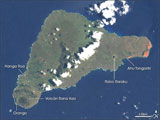
Rats and Dutch traders may be responsible for the mysterious demise of Easter Island according to research presented last week by a University of Hawaii anthropologist. Anthropologist Terry Hunt and colleagues say that introduced Polynesian rats may have played a role in the deforestation of the island's 16 million palm trees which were key to sustaining Easter's human population.
The United States faces another very active Atlantic basin hurricane season in 2006, but with likely fewer landfalling intense hurricanes than in 2005 - the costliest, most destructive hurricane season ever - according to a report issued today by the Colorado State University forecast team.
Biomimicry is being used to fight computer viruses. The Electrical and Computer Engineering Department at the University of Arizona (UA) received $1 million to fund research and development of security software that mimics biological immune systems. The software will screen a computer network for abnormalities, isolating infectious computer viruses, worms and other attack agents while developing software "antibodies" to fight them. UA received the grant from the Army Research Office.
December 6, 2005
This week more than 11,000 geophysicists from around the world are convening in San Francisco for the 2005 American Geophysical Union Fall Meeting. So far several important earth science studies have been released, including the climate change-related research that follows.
One study by researchers at the University of Washington found that Arctic soils contain far more carbon than previously thought. This finding is significant because it means that warmer temperatures could release large amount of carbon into the atmosphere, further fueling climate change.
Another study by the Carnegie Institution's Department of Global Ecology and Lawrence Livermore National Laboratory suggests that planting forests in temperate regions could worsen global warming. The researchers found that northern forests have a net warming effect in that they absorb sunlight while releasing only limited amounts of cooling moisture into the air.
New research out of Ohio State University suggests that following logging, temperate forests take long periods of time to recover their carbon storing capacity. The scientists examined forests of of the upper Great Lakes region, which were 90% logged at the turn of the century, and found that they store only half the carbon the original forests contained. Poor forest management is blamed for the shortfall.
Glen Barry of Forests.org warns that the World Bank will meet Thursday to decide whether it will fund large-scale logging in the Democratic Republic of Congo's rainforests. The country, home to the second largest rainforest in the world after Brazil, is emerging from years of civil strife which resulted in the deaths of some 3.8 million people from violence and disease. Some 600,000 square kilometers are slated for logging.
WWF has again announced the discovery of a mysterious carnivore found in Borneo rain forest. This time around the conservation group has pictures of the bushy-tailed animal which it likens to a cat. The group also warns that the creature's fate is in doubt due to widespread deforestation on Borneo and a massive palm oil plantation planned for the heart of the island.
December 5, 2005
Scientists at the Center for Sustainability and the Global Environment (SAGE) at the University of Wisconsin have devised new maps that reveal the human footprint on Earth. The maps show that agricultural activity now dominates more than a third of the Earth's landscape and has emerged as one of the central forces of global environmental change.
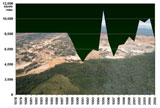
Deforestation in the Amazon rainforest fell 37% for the 2004-2005 year according to Brazilian government figures released today. Between July 2004 and August 2005, 7,298 square miles of rainforest (18,900 square kilometers) -- an area almost half the size of Switzerland -- were destroyed. Last year the figure was 10,088 square miles and since 1978 some 211,180 square miles (546,905 sq km) of forest has been lost.
Governments are becoming increasingly innovative in devising ways to control illegal logging claims new research released by the Food and Agriculture Organization of the United Nations and the International Tropical Timber Organization. Governments has good reason to be more vigilant in monitoring the timber trade: each year, according to World Bank estimates, governments lose about US$5 billion in revenues due to illegal logging. The cost to national economies is even higher -- smuggled timber costs timber producing countries an additional US$10 billion per year. Beyond economic losses from the illicit timber trade, illegal logging has significant environmental impacts including the reduction of biodiversity through habitat destruction and bushmeat hunting, increasing the susceptibility of forests to fire, and contributing to climate change by the conversion of biomass.
December 4, 2005
Countering Bush administration claims to the contrary, environmental officials for the state of California and the Brazilian state of Sao Paulo have found significant evidence that greenhouse gas pollution can be substantially reduced at a profit rather than a cost. The study, commissioned by the William and Flora Hewlett Foundation, found that energy efficiency has helped the California economy grow an extra 3 percent - a $31 billion gain - compared to business as usual. Further, the researchers say that each Californian typically saved about $1,000 per year between 1975 and 1995 just through efficiency standards for buildings and appliances.
A new study says deforestation combined with higher global temperatures and a weakened Atlantic current may weaken Africa's monsoon cycle and plunge equatorial Africa into sustained drought.
December 3, 2005
The mass extinction event at the end of the Permian -- where more than two-thirds of reptile and amphibian families perished and 95% of oceans life forms became extinct -- was probably caused by poisonous volcanic gas, according to research published in the journal Geology. The researchers believe that volcanic gases from the eruption, near present day Siberia, depleted earth's protective ozone layer and acidified the land and sea. The study supports research presented in the September issue of Geology which argued that a dramatic rise in carbon dioxide 250 million years ago may have caused global temperatures to soar and result in Earth's greatest mass extinction. A massive volcanic eruption could well have increased carbon dioxide in the atmosphere which would have warmed and acidified oceans.
December 2, 2005
The Atlantic Ocean circulation that carries warm waters north and returns cold waters south is slowing, putting Europe at risk of colder temperatures, according to research published in Nature. The Atlantic Heat Conveyor, the system of currents in the Atlantic Ocean that result in a net transport of warm water into the northern hemisphere, keeps western Europe warmer than regions at similar latitudes in other parts of the world. A weakening of the system, which includes the Gulf Stream, could cause a cooling in northwest Europe.
Oddly enough, another study, from the European Environment Agency, says Europe is heating up. According to the report, four hottest years on record were 1998, 2002, 2003 and 2004, and ten percent of Alpine glaciers disappeared during the summer of 2003 alone.
December 1, 2005
Despite Australia's resistance to limiting carbon dioxide emissions through the Kyoto Protocol, Australian industry and entrepreneurs are working on novel ways to reduce dependence on traditional fossil fuels. Australia's opposition to the Kyoto Protocol is not surprising -- 85 percent of the country's electricity generation comes from coal and the Australian is highly dependent on energy use. The country targets limiting carbon dioxide emissions to an 8 percent increase in 1990 levels by 2012, whereas other industrialized countries including European Union nations, Russia and Japan (but not the United States) have agreed to cut emissions by 5.2 percent below 1990 levels by 2012. Despite its hesitance to reduce emissions, Australia is particularly vulnerable to climate change.
A group of scientists have a developed a new theory to explain why tropical rain forests have such high biodiversity. The scientists say that species will regulate themselves to make room for each other if they follow "community membership rules." The new theory undermines the conventional 'niche theory' which has been traditionally used to explain community assemblages.
Harlan Watson, chief climate control negotiator for the U.S. State Department, told the Associated Press that the Bush administration does not blame global warming or climate change for extreme weather -- including the hurricanes that thrashed the Gulf earlier this year. "There's a difference between climate and extreme weather," Watson said. "Our scientists continually tell us we cannot blame any single extreme event, attribute that to climate change." Scientists say otherwise: