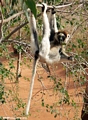
I have revised the entire photo section of the site: Argentina, Australia, Belize, Bhutan, Botswana, Brazil, Burma, Cambodia, Costa Rica, Croatia, Ecuador, Honduras, India, Indonesia, Italy, Jordan, Madagascar, Malaysia, Mexico, Panama, Peru, Nepal, New Zealand, Slovenia, Thailand, United States, and Venezuela.
July 30, 2005
An editorial from the Hudson Institute, a conservative think tank on domestic and international policy issues, argues that human food demand is a greater threat to the planet's wildlife than global warming.
July 29, 2005
A new study in Nature suggests that rivers of South America's Amazon basin are cycling carbon dioxide more quickly than anyone realized. Most of the carbon being exhaled as carbon dioxide from Amazonian rivers and wetlands has spent a mere 5 years sequestered in the trees, other plants and soils of the surrounding landscape. It had been hoped that carbon was sequestered for decades or centuries. The finding may put global carbon-credit trading plans at risk since forests may not serve as the long-term carbon sinks policymakers had anticipated.
July 28, 2005
With the support of the Wildlife Conservation Society, a group of African entrepreneurs has developed a strategy for reducing human-elephant conflicts in Africa while raising money for farmers and conservation. The Elephant Pepper Development Trust both promotes the use of chili peppers as a means of keeping elephants, buffalo, and other species away from important sources of human food and as a viable cash crop to the economy of African nations.
July 27, 2005
Sea turtles that receive the highest protection in Costa Rica and other neighboring countries are dying by the thousands at the hands of unregulated - and unsustainable - commercial fishing in Nicaragua, according to a study by the Bronx Zoo based Wildlife Conservation Society.
Wal-Mart Stores Inc. has built an experimental environmentally friendly store in a northern suburb of Dallas, where the world's biggest -- and notoriously cost-conscious -- retailer is trying to determine whether being green can also be profitable.
July 26, 2005
Mars, Incorporated, the privately held U.S. company company that produces M&Ms, Twix, Snickers and other confectionaries is in talks with several large pharmaceutical companies to develop medications based on flavanols -- plant chemicals with health benefits found in cocoa, according to a report from Reuters. Flavonoids are naturally-occurring compounds found in plant-based foods that have been shown to have a number of health-benefiting properties including anti-inflammatory, anti-allergic, and anti-cancer activity.
July 25, 2005
In the July 22, 2005 issue of the journal Science, scientists argue that modern land-use practices may be trading short-term increases in food production for long-term losses in the environment's ability to support human societies.
July 24, 2005
Last week nearly 2,000 of the world's leading environmental scientists of various disciplines met in Brasilia to present papers at the 19th Annual Meeting of the Society for Conservation Biology. The conference featured more than 750 oral presentations and 965 scientific abstracts on hundreds of topics relating to conservation biology.
July 23, 2005
Can a company generate income while helping local artisans and protecting the environment in far off lands? A Durham, North Carolina firm is doing just that. Since 1993, Forests of the World has imported and distributed "fair-trade" products made by people living in and around some of the planet's most endangered forests.
I had to make some changes to the RSS feed for mongabay.com. Please note the new link
July 22, 2005
Of the world's largest 150 economic entities, 95 are corporations according to data released this month by Fortune Magazine and the World Bank. Wal-Mart, BP, Exxon Mobil, and Royal Dutch/Shell Group all rank in the 25 largest entities in the world, above countries that include Indonesia, Saudi Arabia, Norway, Denmark, Poland, South Africa, and Greece. Such figures suggests that the private sector could potentially be as influential as many governments when addressing environmental concerns. Green groups have lately been targeting corporations in their campaigns to bring about environmental reform.
July 21, 2005
An extremely rare "royal" turtle narrowly escaped a trip to a Chinese soup-pot, thanks to a tiny microchip implanted in its skin, according to experts from the New York-based Wildlife Conservation Society (WCS), who rediscovered the species four years ago in Cambodia.
July 20, 2005
Scientists at the Woods Hole Research Center will burn two and a half square kilometers of Amazon forest in order to study the effects of fire on the rainforest and the forests' ability to recover from repeated burning. According to Daniel Nepstad, a senior scientist with Woods Hole, "By studying the characteristics of fires in this transitional forest on the edge of the Amazon rainforest, Center researchers hope to learn how these accidental fires may affect the vigor, health, biodiversity, and animal habitat in these forests, and in the end, to learn whether recurring fire may threaten the very existence of the forest." Repeated burning of transition forests in the Amazon could cause their eventual replacement by fire-prone scrub vegetation through a process call "savannization."
July 19, 2005
African scientists, in conjunction with research facilities in the United States, are working toward developing super strains of traditional nutritional staples in Africa. These bioengineered foods are being developed under the auspices of the Grand Challenges program, which seeks to tackle problems associated with global health. The Bill and Melinda Gates Foundation is the largest backer of the program, having provided 90% of its funding.
July 18, 2005
While it has been illegal to kill or keep lemurs as pets since 1964, lemurs in Madagascar are hunted where they are not protected by local taboos. Many lemurs are particularly easy targets for hunting because evolution has rendered them ecologically naive in that without natural predators over the majority of their existence, they are less fearful than they should be.
July 16, 2005
A compound derived from an Amazon-rainforest tree is effective in the treatment of the skin disease psoriasis according to a study released in late June in the Journal of the Federation of American Societies for Experimental Biology.
July 12, 2005
For all the talk about "making poverty history" through aid and debt relief at the G8 meeting in Scotland and among aging rock stars at Live8 concerts, perhaps the best tool for poverty alleviation on the continent is the mobile phone. Yes, that ubiquitous handheld device has done wonders for the poor around the world.
July 11, 2005
Engineers, scientists, and business people alike are increasingly turning toward nature for design inspiration. The field of biomimetics, the application of methods and systems found in nature to engineering and technology, has spawned a number of innovations far superior to anything the human mind alone could have devised. The reason is simple. Nature, through billions of years of trial and error, has produced effective solutions to innumerable complicated real-world problems. The rigorous competition of natural selection means waste and efficiency is not tolerated in natural systems, unlike many of the technologies devised by humans.
July 9, 2005
A recent paper in Tissue Engineering proposed two new techniques of tissue engineering that may one day lead to the affordable production of lab grown meat for human consumption. The in vitro meat could be healthier for consumers and cut down on pollution produced by factory farming.
July 8, 2005
Officials in Alaska say rising temperatures have produced an unusually high number of lightning-sparked fires on the Kenai Peninsula, south of Anchorage. So far this summer, there have been 13 lightning-related fires along the state's south-central coast compared with 12 lightning-sparked fires in the region between 1993 and 2004. Sharon Alden, manager of Alaska's fire weather program, says "I believe there is global warming, but what we're talking about isn't global warming. We're talking about regional warming." Scientists predict that the first signs of climate change will come in the planet's coldest regions.
July 7, 2005
|
|
July 6, 2005
The melting of a glacier in the Peruvian Andes due to global climate change is impacting the religious practices of local people, according to an article run last month in The Wall Street Journal. It is likely that people living in extreme environments like the Andes and the Arctic will be the first to see the impacts of climate change.
July 5, 2005
According to a study by the New York-based Wildlife Conservation Society, controlling the movements of wildlife in markets is a cost-effective means of keeping potential deadly pandemics such as SARS and influenza from occurring. The study appears in the July edition of the journal Emerging Infectious Diseases. The cost of controlling the spread of diseases afflicting both human and animal populations has reached hundreds of billions of dollars globally.
July 4, 2005
In a study published late last week in Raffles Bulletin of Zoology, researchers confirmed the discovery of 35 new frog species in Sri Lanka over the past decade brining the number of frog species in the island country to 105. However, the survey found that 17 of these species have disappeared and at least another 11 face imminent extinction unless their habitat is protected.
July 3, 2005
|
July 2, 2005
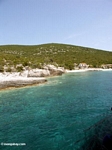
I am rolling out a photo blog to highlight some of the images on the site. Each day I will try to add a picture along with a little background information on the image.
July 1, 2005
According to a new study the World Wildlife Fund (WWF), global climate change will bring hotter, drier summers to the Mediterranean and significantly impact two of the region's largest industries, agriculture and tourism.